Showing posts with label Jewish. Show all posts

Thursday, April 11, 2019

This week's ongoing Bible study will be part 3 of Acts chapter 21

This week's ongoing Biblical studies on the Progressive Christian Blog with Author & Web Minister Paul J. Bern will be finishing up Acts chapter 21: The arrest of the apostle Paul" --  https://revpauljbern.wordpress.com/2019/04/11/this-weeks-ongoing-bible-lesson-will-be-part-3-of-acts-chapter-21/ #personalsacrifice #bravery #discipleship


Wednesday, November 14, 2018

This week's BIble study will move on to part 1 of Acts chapter 16

Timothy Joins Paul and Silas
[Acts chapter 16, verses 1-15]
To view this on my website, click here :-)


This week, in our ongoing study of the chronology of the writings of the apostle Luke, we'll be moving on to Acts chapter 16. When we concluded Acts 15 last week, Paul and Barnabas had split into two teams after having a considerable disagreement about whether the apostle Mark should come with them. But this breakup over what amounted to a personnel issue was exactly what God had planned, since the two men who had been working together for several previous years were now split up into two teams. Barnabas took Mark, who was rejoining the apostles after a hiatus of undetermined length, and sailed for Cyprus. Paul took Silas and “went through Syria and Cilicia, strengthening the churches”. So today, as we begin part one of Acts 16, Paul and Silas have departed Antioch and are in the process of moving from town to town – which is where we will begin at verse one.


“1) Paul came to Derbe and then to Lystra, where a disciple named Timothy lived, whose mother was Jewish and a believer but whose father was a Greek. 2) The believers at Lystra and Iconium spoke well of him. 3) Paul wanted to take him along on the journey, so he circumcised him because of the Jews who lived in that area, for they all knew that his father was a Greek. 4) As they traveled from town to town, they delivered the decisions reached by the apostles and elders in Jerusalem for the people to obey. 5) So the churches were strengthened in the faith and grew daily in numbers. 6) Paul and his companions traveled throughout the region of Phrygia and Galatia, having been kept by the Holy Spirit from preaching the word in the province of Asia. 7) When they came to the border of Mysia, they tried to enter Bithynia, but the Spirit of Jesus would not allow them to. 8) So they passed by Mysia and went down to Troas. 9) During the night Paul had a vision of a man of Macedonia standing and begging him, “Come over to Macedonia and help us.” 10) After Paul had seen the vision, we got ready at once to leave for Macedonia, concluding that God had called us to preach the gospel to them.” (Acts 16, verses 1-10)


So Paul and Silas go back to where he and Barnabas had been before, to the churches they had planted together in Derbe and Lystra. The apostle Paul wanted to introduce Silas to these churches as his new coworker, as well as to further build these churches up in the strength and power of the Lord Jesus Christ. It was at Lystra, where Timothy lived, that he was introduced to Paul and Silas, and who ultimately had 2 books in the New Testament named after him. But then in verse 3, we encounter something a bit unexpected – as a condition to entering the ministry and being co-workers with Paul and Silas, Paul has him circumcised. The Bible's reason is clearly stated: “Paul wanted to take him along on the journey, so he circumcised him because of the Jews who lived in that area, for they all knew that his father was a Greek.”


I'm sure you remember from last week's study that this very topic was debated at length at the Council at Jerusalem, and that the decision had been handed down that Jewish believers in Jesus should not compel, not was it necessary to require, new Gentile converts to Christianity to be circumcised. And yet, the first thing Paul did with Timothy was to have him circumcised! The apostle Paul was an orthodox Jew, and a former member of the Sanhedrin at Jerusalem, so Jewish customs meant a great deal to him. Granted, all those who knew Timothy knew his father was Gentile and his mother Jewish. Paul did not have Timothy circumcised to honor his mother, he did so in the name of 'peaceful coexistence' between Jews and Greeks there at Lystra, and as a Jewish man. As I wrote in last week's study, Paul was one of those people who were set in their ways, even if it meant going against the grain of the new faith in which he believed so strongly and taught so fervently. For that reason, I think he also circumcised Timothy as a condition of being his co-worker. Remember, this was the same man who said gay people can't be saved, who said that the apostle Mark should be banned from the ministry, and who said women should not be allowed to preach or teach, but should “remain silent”.


“4) As they traveled from town to town, they delivered the decisions reached by the apostles and elders in Jerusalem for the people to obey. 5) So the churches were strengthened in the faith and grew daily in numbers.” With this being done, the old requirement of male circumcision was done away with for good – except for certain churches that insist on continuing with this apostasy to this day. We went over that in part 2 of Acts 15. This decision strengthened the faith of the believers immeasurably, because the burden of of Old Law had been lifted for good. At last they were free to practice their faiths without feeling like they had Moses and the prophets constantly looking over their shoulders.


“6) Paul and his companions traveled throughout the region of Phrygia and Galatia, having been kept by the Holy Spirit from preaching the word in the province of Asia. 7) When they came to the border of Mysia, they tried to enter Bithynia, but the Spirit of Jesus would not allow them to.” The geographic locations Luke was referring to here make up the area around the Black Sea, in what would be the southwestern Russian provinces today. After around the eight century, this area became predominantly Muslim, and it remains so to this day. And so they ended up going to Macedonia. And now let's move on to part 2 of this week's study, beginning at verse eleven.


“11) From Troas we put out to sea and sailed straight for Samothrace, and the next day we went on to Neapolis. 12) From there we traveled to Philippi, a Roman colony and the leading city of that district of Macedonia. And we stayed there several days. 13) On the Sabbath we went outside the city gate to the river, where we expected to find a place of prayer. We sat down and began to speak to the women who had gathered there. 14) One of those listening was a woman from the city of Thyatira named Lydia, a dealer in purple cloth. She was a worshiper of God. The Lord opened her heart to respond to Paul’s message. 15) When she and the members of her household were baptized, she invited us to her home. 'If you consider me a believer in the Lord,' she said, 'come and stay at my house.' And she persuaded us.”


Troas, Samothrace and Neapolis were 3 towns within a couple days walk from each other. All these towns were on or near the Mediterranean coast, in the northeast corner of that body of water, where modern-day Turkey shares a border with Macedonia. From there they went on to Philippi, the capital, where they founded the church whose name would inspire the Book of Philippians. “13) On the Sabbath we went outside the city gate to the river, where we expected to find a place of prayer. We sat down and began to speak to the women who had gathered there. 14) One of those listening was a woman from the city of Thyatira named Lydia, a dealer in purple cloth. She was a worshiper of God. The Lord opened her heart to respond to Paul’s message.”


The reason they had to go outside the city gate to pray is because there was evidently no synagogue where they could go. Or at least, not there in Philippi. So they went down to the river to pray, and presumably to bathe, although the Bible leaves out little details like that. So they encountered a group of women there, who were presumably getting their daily washing done, and they convert Lydia to the faith. So moved by the experience is Lydia that she insists on giving Paul and Silas lodging for the duration of their stay. “When she and the members of her household were baptized, she invited us to her home. 'If you consider me a believer in the Lord,' she said, 'come and stay at my house.' And she persuaded us.” And so Paul and Silas stayed there at Lydia's house for the duration of their stay there. And next week, when we move on to part 2 of Acts 16, we'll see what happens next, as Paul and Silas find themselves in the same bad situation that Peter had found himself in Acts chapter 12 – in jail for the sake of the Gospel. See you next week!


Wednesday, October 17, 2018

This week's ongoing Bible study will be part 2 of Acts chapter 14

Paul and Barnabas Escape Death, Emerge Triumphant
[Acts chapter 14, verses 14-28]
To view this on my website, click here :-)


When we last concluded our study of Acts chapter 14, Paul and Barnabas had entered the city of Lystra and had preached the Word in the local synagogue. The people present had received with gratitude the salvation of Christ, but the Gentiles of that city were very pagan in their religious practices. The “priest of the Temple of Zeus” had brought bulls and wreaths to the city gates to offer sacrifices to the pair of preachers. As I wrote last week, this could well have been a considerable temptation to them both. They could have set up a Christian church, and had the whole town eating right out of their hands if they wanted to. In a way, it could have been an excellent opportunity to turn the entire town to Christ.


Except that this would have been wrong, based on what the Bible teaches (see Isaiah 44: 17). It was Christ who was to be worshiped and not themselves. Indeed, when they realized what was occurring – keep in mind it was their first day in that city, having no prior knowledge of it as far as I know – the scene before them upset Paul and Barnabas a great deal. If nothing else, it proves that these two men were preachers of integrity because they lived and breathed it. This is the kind of thing that can happen when one is led by the Holy Spirit rather than by their own. To find out just how upset they became, let's take up where we left off last week, beginning at verse 14:


“14) But when the apostles Barnabas and Paul heard of this, they tore their clothes and rushed out into the crowd, shouting: 15) “Friends, why are you doing this? We too are only human, like you. We are bringing you good news, telling you to turn from these worthless things to the living God, who made the heavens and the earth and the sea and everything in them. 16) In the past, he let all nations go their own way. 17) Yet he has not left himself without testimony: He has shown kindness by giving you rain from heaven and crops in their seasons; he provides you with plenty of food and fills your hearts with joy.” 18) Even with these words, they had difficulty keeping the crowd from sacrificing to them.” (Acts 14, verses 14-18)


In verses 14 and 15, Paul and Barnabas are shouting at the crowd that there is only one true God. They even tore their clothes in their duress! “We are bringing you good news, telling you to turn from these worthless things to the living God, who made the heavens and the earth and the sea and everything in them.” In verses 17 and 18, they are asking the crowd to believe in – at the very least – the true God who brings the sun, the rain, the crops and the seasons. 'If you must pollute the message of Christ with your idols, then at least show some pure belief in the Father who sent Him!' This was the essence of what Paul and Barnabas were trying to say to the crowd. “18) Even with these words, they had difficulty keeping the crowd from sacrificing to them.” To sum it up, Paul and Barnabas had a tough crowd on their hands. They were having a difficult day at the office, that's for sure. But as we continue this week's study beginning at verse 19, their day was about to get so much worse.


“19) Then some Jews came from Antioch and Iconium and won the crowd over. They stoned Paul and dragged him outside the city, thinking he was dead. 20) But after the disciples had gathered around him, he got up and went back into the city. The next day he and Barnabas left for Derbe. 21) They preached the gospel in that city and won a large number of disciples. Then they returned to Lystra, Iconium and Antioch, 22) strengthening the disciples and encouraging them to remain true to the faith. 'We must go through many hardships to enter the kingdom of God,' they said.” (Acts 14, verses 19-22)


Paul's and Barnabas' trolls of that day, the Jewish temple authorities from the two cities where they had just come from, caught up with them at right about this time. Remember from last week's study, verses 5-7, where Paul and Barnabas had to flee Iconium to keep from getting killed? It was those very people who showed up unannounced and stirred up some of the Jews that Paul and Barnabas had just converted earlier that day, causing them to turn against them. “They stoned Paul and dragged him outside the city, thinking he was dead. But after the disciples had gathered around him, he got up and went back into the city.” Paul may not have been dead, but he was certainly close to it. But the disciples gathered around him, praying over his body continuously for an undetermined amount of time, that detail being lost in the mists of history. By being given up for dead, only to walk back into the city later that same day, Paul emulated Christ while Barnabas emulated the apostle John, the disciple who stayed with Jesus' mother while Jesus suffered and died on the cross.


“The next day he and Barnabas left for Derbe. They preached the gospel in that city and won a large number of disciples.” I find it noteworthy that there was no bitterness on Paul's part toward Barnabas with regard to his stoning the day before. Barnabas had evidently been spared from the majority of the stoning, but he was bruised and bleeding enough to be unable to help protect Paul from the mob of his Jewish 'brethren'. Still, Paul didn't hold it against him, or at the very least had settled any differences he may have had with Barnabas well before they left on their journey to Derbe. “Then they returned to Lystra, Iconium and Antioch, strengthening the disciples and encouraging them to remain true to the faith. 'We must go through many hardships to enter the kingdom of God,' they said.”


Paul and Barnabas felt compelled to return to the cities they had most recently visited, to tell the congregations there how Paul's life was spared, and to greatly encourage them. Let's not forget this was a time of wholesale persecution of Christians and all things having to do with the Gospel. It took a lot of guts to express belief in Christ and openly live one's faith back then, just like it took a lot of guts for Blacks and white folks to march together for civil rights and racial equality in the 1950's and 1960's. There is a price to be paid for taking a public stand in favor of an unpopular idea, or an unpopular religion like Christianity. The problem many have with Christianity is that it entails an ongoing relationship with the Son of God. So what's so bad about that? It demands accountability on the part of the believer, and insists the we adhere to the teachings of Jesus Christ. Unfortunately for some, the whole idea of a Power greater than themselves is more than they can stomach. Which, by extension, makes them extremely self-centered individuals. Which is why the religious establishment of the time hated Christians so much. They were Jews competing with Jewish dogma, and they were winning at every turn. And now, let's conclude this week's study, beginning at verse 23.


“23) Paul and Barnabas appointed elders for them in each church and, with prayer and fasting, committed them to the Lord, in whom they had put their trust. 24) After going through Pisidia, they came into Pamphylia, 25) and when they had preached the word in Perga, they went down to Attalia. 26) From Attalia they sailed back to Antioch, where they had been committed to the grace of God for the work they had now completed. 27) On arriving there, they gathered the church together and reported all that God had done through them and how he had opened a door of faith to the Gentiles. 28) And they stayed there a long time with the disciples.” (Acts 14, verses 23-28)


As we can see in verse 23, Paul and Barnabas knew that, once they left Lystra and Iconium a second time, it was doubtful as to when they would be able to return. And so, after considerable prayer and fasting, they “committed them to the Lord, in whom they had put their trust”. They put their trust in the elders they appointed, sure enough, but Paul and Barnabas put their ultimate trust in God, knowing He would see them through as time went on. To view this another way, Paul and Barnabas knew when to move on. They were both very perceptive individuals of great discretion, and I think that's the most likely reason God chose them both.


“From Attalia they sailed back to Antioch, where they had been committed to the grace of God for the work they had now completed. On arriving there, they gathered the church together and reported all that God had done through them....” Antioch, which was situated several hundred miles north of Jerusalem, became the northern base of Christianity in the early days of the church. And so all that had happened to Paul and Barnabas, on what has become known as Paul's first missionary journey, was disseminated and passed on by word of mouth there at Antioch. The Church was greatly enriched and empowered by Paul's and Barnabas' stories of leading others to salvation while barely escaping death themselves. In that same vein, I hope to do the same with all my readers, enriching and empowering them and their lives as we all learn together to live better for Christ. And next week, we'll get started on chapter 15 in our ongoing studies of the writings of the apostle Luke.

Wednesday, October 10, 2018

This week's ongoing Bible study will be part 1 of Acts chapter 14

Paul and Barnabas in Iconium, Derbe and Lystra
[Acts chapter 14, verse 1-13]
Please click here to view this on my website :-)


Last week when we concluded Acts chapter 13, Barnabas and the apostle Paul had just completed their work in Pisidian Antioch, preaching and teaching the Word to any and all who would embrace it, and so dedicate the rest of their lives to serving Christ by ministering to others. They did not allow themselves to be dissuaded or discouraged by those who opposed their message, and there were quite a few of those! There are many today who still refuse to embrace Jesus Christ as their Lord and Savior. Thanks to the internet, and particularly social media, the opponents of Christ are more vocal today than ever before. I should know, I get trolled all the time for my Progressive Christian messages. Sometimes, I get trolled by Atheists and agnostics with bad attitudes. Other times, the trolls can be other Christians from the ultra-right. Back in the 1st century, all the trolls simply followed Paul and Barnabas everywhere they went. Ditto for the other Apostles, all of whom were still alive when this portion of Acts was first written.


This week as we move on to Acts chapter 14, we find Paul and Barnabas in the city of Iconium. Iconium lay some 60 miles to the east-southeast of Pisidian Antioch along the eastern branch of a Roman road that had been constructed in 6 B.C. for military purposes, the via Sebaste. Considering that Paul and Barnabas likely stopped and talked along the way to all those who were receptive to their message of salvation in Christ, this 60-mile trek must have taken them three or four days, possibly longer. And so this week, as we take up where we left off, we find these two heroes of the early Church and disciples of Christ just arriving in Iconium, and as usual their first stop was the local synagogue. So let's all get started at verse 1 of Acts 14:


“1) At Iconium Paul and Barnabas went as usual into the Jewish synagogue. There they spoke so effectively that a great number of Jews and Greeks believed. 2) But the Jews who refused to believe stirred up the other Gentiles and poisoned their minds against the brothers. 3) So Paul and Barnabas spent considerable time there, speaking boldly for the Lord, who confirmed the message of his grace by enabling them to perform signs and wonders. 4) The people of the city were divided; some sided with the Jews, others with the apostles. 5) There was a plot afoot among both Gentiles and Jews, together with their leaders, to mistreat them and stone them. 6) But they found out about it and fled to the Lycaonian cities of Lystra and Derbe and to the surrounding country, 7) where they continued to preach the gospel.”


People from similar backgrounds tend to hang out together, and Jewish people are no different. Paul and Barnabas were themselves Jewish, so they always proceeded directly to the local synagogue whenever they entered another new city or village. “There they spoke so effectively that a great number of Jews and Greeks believed. 2) But the Jews who refused to believe stirred up the other Gentiles and poisoned their minds against the brothers.” 'Greeks' from a Jewish standpoint in that time and place was a synonym for all non-Jews, with the majority being of Greek extraction due to Greece's relatively close proximity to the Middle East. We can also see here that – by this time – Paul, Barnabas and all the other Apostles and their disciples had preached and taught about the ministry, sacrifice and ultimate resurrection of Christ that they had become very well-spoken. So much so, combined with the Holy Spirit that lived within them, that they had all become the first evangelists despite encountering very vocal opposition.


“3) So Paul and Barnabas spent considerable time there, speaking boldly for the Lord, who confirmed the message of his grace by enabling them to perform signs and wonders.” Paul and Barnabas were two very tough and fearless individuals, something the world needs a lot more of. They could not be bullied or intimidated in any way, because they knew the Lord was totally on their side, being that they were totally on the Lord's as well. They were also well aware of the great reward that awaited them, provided they kept their faith strong. They put up with their 'trolls', who were in their faces every time they spoke, constantly interrupting them and being argumentative and abusive, even being belligerent and threatening at times.


“ 4) The people of the city were divided; some sided with the Jews, others with the apostles.” As it was back then, so it is today. The Gospel of Christ reaches down inside the heart, mind and soul of every human being who has ever lived, who lives today, and whoever will live. Those who hear the Word of God and reject it will do so vehemently, and those who receive it will do so with gladness and thanksgiving. But the Gospel always has been and always will be highly controversial, as it is written: “I revealed myself to those who did not ask for me; I was found by those who did not seek me. To a nation that did not call on my name, I said, ‘Here am I, here am I.’” (Isaiah 65: 1)


“ There was a plot afoot among both Gentiles and Jews, together with their leaders, to mistreat them and stone them. 6) But they found out about it and fled to the Lycaonian cities of Lystra and Derbe....” A more accurate translation of verse 6 would have been that there was a plot that was hatched by Jewish and Gentile businessmen, presumably the ones who were the biggest contributors to the synagogue where Paul and Barnabas were preaching. The Gospel of Jesus, it seems, was viewed as a threat to their way of life. They were deeply concerned that the Gospel could ruin attendance at their services, and rightfully so. “But they found out about it and fled to the Lycaonian cities of Lystra and Derbe.” These cities were in a province of Asia minor that was adjacent to where had been ministering. This brings us to the second half of this week's study, starting at verse 8.


“8) In Lystra there sat a man who was lame. He had been that way from birth and had never walked. 9) He listened to Paul as he was speaking. Paul looked directly at him, saw that he had faith to be healed 10) and called out, “Stand up on your feet!” At that, the man jumped up and began to walk. 11) When the crowd saw what Paul had done, they shouted in the Lycaonian language, “The gods have come down to us in human form!” 12) Barnabas they called Zeus, and Paul they called Hermes because he was the chief speaker. 13) The priest of Zeus, whose temple was just outside the city, brought bulls and wreaths to the city gates because he and the crowd wanted to offer sacrifices to them.”


““8) In Lystra there sat a man who was lame..... 9) He listened to Paul as he was speaking. Paul looked directly at him, saw that he had faith to be healed 10) and called out, 'Stand up on your feet!' At that, the man jumped up and began to walk.” The Spirit of the Lord is powerful in that it can heal all those who avail themselves to it. This must have been quite evident in this case, since Paul – possibly prompted by Barnabas – could see by the expression on the lame man's face that “he had faith to be healed”. I can see him now, looking up towards heaven and asking the Lord to send the power through himself to heal the lame gentleman, and the response was immediate and overwhelming!!


“11) When the crowd saw what Paul had done, they shouted in the Lycaonian language, “The gods have come down to us in human form!” 12) Barnabas they called Zeus, and Paul they called Hermes because he was the chief speaker.” Let's keep in mind that Paul and Barnabas had only arrived in town that same day. Since this was in a different region of Asia Minor than the one they had just left, they may have had a limited understanding of the local dialect. I am certain, however, that Paul and Barnabas knew who Zeus and Hermes were. They were likely saying, 'no, no, we're not Zeus or Hermes' to the citizens of Lystra, but apparently they weren't getting through, as we see by the very next verse. “The priest of Zeus, whose temple was just outside the city, brought bulls and wreaths to the city gates because he and the crowd wanted to offer sacrifices to them.”


If Barnabas of Paul had not fully understood what the Lystran's were saying to them before, they surely did by now! There before them was the chief priest of their pagan “temple”, who had brought some bulls (it doesn't say how many) and some commemorative wreaths to have a great pagan feast in honor of Paul and Barnabas. Obviously this was not what Barnabas and Paul originally had in mind. Still, this could well have been a considerable temptation to them both. They could have set up a Christian church, and had the whole town eating right out of their hands if they wanted to. In a way, it could have been an excellent opportunity to turn the entire town to Christ. But would that have been the right way to go about it? To find out the answer, be sure and come on back next week for part 2 of Acts chapter 14. Shalom!


Wednesday, July 25, 2018

This week's ongoing Bible study will be part 2 of Acts chapter 10

The Lord Brings Cornelius and Peter Together
[Acts chapter 10, verses 17-33]
For better website, tablet or phone viewing, click here :-)


Last week when we left off at verse 16 of Acts chapter 10, the apostle Peter was having a vision while he was in prayer, and I made the point that his vision would not have occurred had he not been in a state of deep and reverent prayer. Using that as part of my closing remarks, I recall challenging all of you to bring your prayer lives up to Peter's level. I will not hold it against anyone if they are not at that level as of yet, nor against those who have tried and have fallen short. This is common to everyone, so let's not be discouraged when we miss the mark. We're only human, so this is bound to happen from time to time. The main thing is to never give up, and to keep on trying no matter what! Because some day we will all achieve this Spiritual goal together!


This week as we move on to part two of Acts chapter 10, Cornelius of Caesaria is arriving at the home of Simon the tanner where Peter is staying just as Peter has come out of his trance (see verse 10 of chapter 10 from last week's study). So let's take up where we left off beginning at verse 17: “While Peter was wondering about the meaning of the vision, the Spirit said to him, 'Simon, three men are looking for you. So get up and go downstairs. Do not hesitate to go with them, for I have sent them.' Peter went downstairs and said to the men, 'I'm the one you are looking for. Why have you come?' The men replied, 'We have come from Cornelius the centurion. He is a righteous and God-fearing man, who is respected by all the Jewish people. A holy angel told him to have you come to his house so that he could hear what you have to say.' Then Peter invited the men into his house to be his guests. The next day Peter started out with them, and some of the brothers from Joppa went along.” (Acts 10, verses 17-23)


Let's remember once again our lesson from last week, when Peter was told in his vision to “not call anything impure that God has made clean” (see verse 15 from last week's study). In the context of Peter's vision, 'anything' apparently referred to certain animals that were forbidden to be eaten by Jewish custom. This has its origins in Leviticus chapter 11, which you should research on your own – it's only a 5-minute read. It also applies to all other things, since “the earth is the Lord's and everything in it” (Psalm 24: 1). So this would include, for example, the marijuana plant, which is constantly demonstrating remarkable medical properties for literally dozens of diseases, including some psychiatric disorders. In so doing, medical cannabis has exposed the fraudulent nature of some mainstream psychiatric “medications”. That's the real reason marijuana is still criminalized. If it were legal, that would present an existential threat to Big Pharma. You can get the full story from my 2016 book, “Cannabis Legalization and the Bible: Compatible or Not?”, which you can order from this link. But let me get back to this week's study.


“Simon, three men are looking for you. So get up and go downstairs. Do not hesitate to go with them, for I have sent them.' Peter went downstairs and said to the men, 'I'm the one you are looking for.” Notice Peter's immediate obedience. Let's all make sure our obedience to the Lord is on the same level. Next, he is invited to Cornelius' house even while still staying with Simon the tanner. It seems that Peter, along with the rest of the Twelve, nearly always had a place to stay in the homes of those he ministered to. These were perceptive people who knew the Gospel was of more value than any precious metals or jewelry, nor is it something that can be purchased. They saw their hospitality as a form of repayment to Peter and the others, and they were happy to have an opportunity to serve – just as we should.


“We have come from Cornelius the centurion. He is a righteous and God-fearing man, who is respected by all the Jewish people. A holy angel told him to have you come to his house so that he could hear what you have to say.” This is confirmation in the Spirit for Peter, who was already expecting the detachment sent by Cornelius by way of his vision. Cornelius is clearly wanting to hear the Gospel from Peter, especially since he was relatively close to him (only about a day's walk). “The next day Peter started out with them, and some of the brothers from Joppa went along.” And so off to Caesaria they went, traveling by foot as usual. And now let's move on to the second half of this week's lesson, starting at verse 24.


“The following day he arrived in Caesaria. Cornelius was expecting them and had called together his relatives and close friends. As Peter entered the house, Cornelius met him and fell at his feet in reverence. But Peter made him stand up. 'Stand up', he said, 'I am only a man myself.' Talking with him, Peter went inside and found a large gathering of people. He said to them: 'You are well aware that it is against our law for a Jew to associate with a Gentile or visit him. But God has shown me that I should not call any man impure or unclean. So when I was sent for, I came without raising any objection. May I ask why you sent for me?'” (Acts 10, verses 24-29)


Let's not forget who Cornelius is. Cornelius is a complex individual. He's a Roman centurion who also happens to be a Christian sympathizer. Along the way he became a man of real faith, a man who wanted to know more about his newfound faith, maybe even a whole lot more. Cornelius may not have been entirely sure himself about how much of his new faith he could process, and so he had practically jumped at the chance to hear the Gospel first-hand from Peter. Let's also not forget the character and integrity of Peter, who never allowed his status as the lead apostle (“thou art Peter, and upon this rock I will build my church”) to go to his head. He remained a humble individual throughout his life, as it has been documented: “Stand up', he said, 'I am only a man myself.”


Peter then goes on to reveal the meaning of his vision as it applied to himself and all the others present. “You are well aware that it is against our law for a Jew to associate with a Gentile or visit him. But God has shown me that I should not call any man impure or unclean.” So in this context, the Spirit of the Lord in Peter's vision was telling Peter to end the period of dissociation with Gentiles in his own life. This was a personal command from God to Peter, the military equivalent of a direct order. This also applies to racism the world over, and particularly here in America. Nobody can profess their love for God, no matter how loud or emotional, while at the same time despising anyone He has created. The Bible is clear in its stance against racism and bigotry in all its forms, no matter how harmless it may seem to a small minority who may consider themselves greater than others. The whole idea that one human being can be any better than another is a lie straight out of the deepest pits of Hell!


“Cornelius answered, 'Four days ago I was in my house praying at this hour, at three in the afternoon. Suddenly a man in shining clothes stood before me and said, 'Cornelius, God has heard your prayer and remembered your gifts to the poor. Send to Joppa for Simon who is called Peter. He is a guest of Simon the tanner, who lives by the sea.' So I sent for you immediately, and it was good for you to come. Now we are all here in the presence of God to listen to everything the Lord has commanded you to tell us.” (Acts 10, verses 30-33)


Cornelius had a burning faith so intense that he used all the available resources he had to arrange things so that he might hear a Word from God through Christ, who Peter represented by deed and reputation because he was so incorruptible. If only we had a lot more politicians like Peter, America would be in much better shape! And so as we close out this week's study, Peter and Cornelius have been united in person and in spirit with the Lord as he presided over the home of Cornelius and everyone in it. Cornelius encourages Peter to go ahead and tell all he knows about Christ and his Gospel. As we will see next week when we move on to part 3, Peter eagerly shares all that Jesus taught him and the other apostles, and he does so with the greatest enthusiasm! So be sure and return next week for the third and final part of our study of Acts chapter 10. Shalom!

Wednesday, April 25, 2018

This week's ongoing Bible study will be Acts chapter 6

The Delegation of Duties and the Arrest of St. Steven
[Acts chapter 6]
For better small screen viewing, click here :-)


Last week when we concluded our study and analysis of part 3 of Acts chapter 5, we closed out with the apostles as they left the Sanhedrin after being released from custody for preaching and teaching in the Name of the Son of God. They were rejoicing after having been flogged, and for spending the night in jail for proclaiming that Jesus Christ had died and then rose again in order to save humanity. This week as we move on to chapter 6, we will find it is actually a segue into the inspiring story of Stephen, an early Church leader who achieved martyrdom without even trying. So let's begin our study of this week's lesson starting at verse 1, and I quote:


“In those days when the number of disciples was increasing, the Grecian Jews among them complained against the Hebraic Jews because their widows were being overlooked in the daily distribution of food. So the Twelve gathered all the disciples together and said, 'It would not be right for us to neglect the ministry of the Word of God in order to wait on tables. Brothers, choose seven men from among you who are known to be full of the Spirit and wisdom. We will turn this responsibility over to them and will give our attention to prayer and the ministry of the Word.' This proposal pleased the whole group. They chose Stephen, a man full of faith and the Holy Spirit; also Philip, Procuras, Nicanor, Timon, Parmenas, and Nicolas from Antioch, a convert to Judaism. They presented the men to the apostles, who prayed and laid their hands on them. So the Word of God spread. The number of disciples increased rapidly, and a large number of priests became obedient to the faith.” (Acts 6, verses 1-7)


A lack of maturity among a sizable portion of humanity is nothing new, and the same goes for church gatherings of all types. The early Church was no exception, as we can see from this first verse of the above passage. But the complaints of the Greek and Israeli Jews against one another are, to me, a side issue compared to what else is mentioned in that same verse – daily food distribution. As I pointed out back in Acts chapter 4, the early Church operated like a social democracy. When people were converted to Christianity as it was originally intended, those who owned property or other riches sold them and brought the proceeds to the apostles on a voluntary basis. That money was used to provide food, clothing and as a referral for shelter arrangements to anyone who had a legitimate need. Remember too, this was back in the day before government usurped this responsibility so public welfare could be introduced. There was no unemployment or disability available either. Since the need was so great, there was also a complete lack of discrimination to this unconditional help, and so occasionally disagreements would break out.


By this time, the Church was going through growing pains, and its rate of expansion was outrunning the abilities of the Twelve to keep up with things. So here, then, we have the first instance of the delegation of authority among the greater Church, like the first division of a single cell into two. Today, that same Greater Church has well over 2 ½ billion members! But to get back to today's lesson, the delegation of authority was given to seven men, starting with Steven, who we will get to shortly. So they chose “seven men from among (them) who are known to be full of the Spirit and wisdom. We will turn this responsibility over to them and will give our attention to prayer and the ministry of the Word.” Food is important, everyone has to eat, but taking care of this had become a distraction instead of a ministry. Still, since the need was so critical back then, with the overwhelming majority of people being trapped in poverty, the most trustworthy men were appointed to oversee this task. Evidently no women were chosen out of security concerns, not because of what we would call gender bias. And now let's move on to part 2 of today's lesson, beginning at verse 8.


“Now Stephen, a man full of God's grace and power, did great wonders and miraculous signs among the people. Opposition arose, however, from members of the Synagogue of the Freedmen (as it was called) – Jews from Cyrene and Alexandria as well as the provinces of Cilicia and Asia. These men began to argue with Stephen, but they could not stand up against his wisdom or the Spirit by whom he spoke. Then they secretly persuaded some men to say, 'We have heard Stephen speak words of blasphemy against Moses and against God.' So they stirred up the people and the elders and the teachers of the law. They seized Stephen and brought him before the Sanhedrin. They produced false witnesses, who testified, 'This fellow never stops speaking against this holy place and against the law. For we have heard him say this Jesus of Nazereth will destroy this place and change the customs Moses handed down to us.' All who were sitting in the Sanhedrin looked intently at Stephen, and they saw his face was like the face of an angel.” (Acts 6, verses 8-15)


Who in verses 8 and 9 are the Synagogue of Freedmen? This is what eventually became the Freemasons, although it went through quite a few changes along the way. Today Freemasonry is generally associated with the Occult, which is the polar opposite of Christianity and everything Jesus stood for. Some well-meaning Christians have been misled into believing the Masons are a Christian organization, but they are Christian in name only. For these reasons, I advise against joining them, and I would advise Christians who are currently Freemasons to strongly reconsider their membership. As for myself, it's Jesus and him alone for me. I don't need to belong to the Masons to prove my loyalty for Christ, and neither should you!


Stephen's passion for Christ was so evident that these men from the 'Synagogue of Freedmen' became very irritated with him to the point of being verbally abusive – at first. But as our text says, Stephen was simply too smart for his opposition. So they set him up to take a fall – a permanent one. “Then they secretly persuaded some men to say, 'We have heard Stephen speak words of blasphemy against Moses and against God.' So they stirred up the people and the elders and the teachers of the law.” So what we have here is a 1st century equivalent to a combination propaganda and smear campaign, and it was all aimed at Stephen! As we read in the above passage of scripture, this ultimately became a lynch mob. “They seized Stephen and brought him before the Sanhedrin. They produced false witnesses....” The prosecution of Stephen before the Sanhedrin – the same Sanhedrin that handed Jesus over to Pilate and who had flogged the apostles twice (so far) for teaching that Jesus was in fact the Messiah – was going to go in much the same fashion as before, except that Stephen vigorously defended himself and his faith, and he did so brilliantly, as we will see.


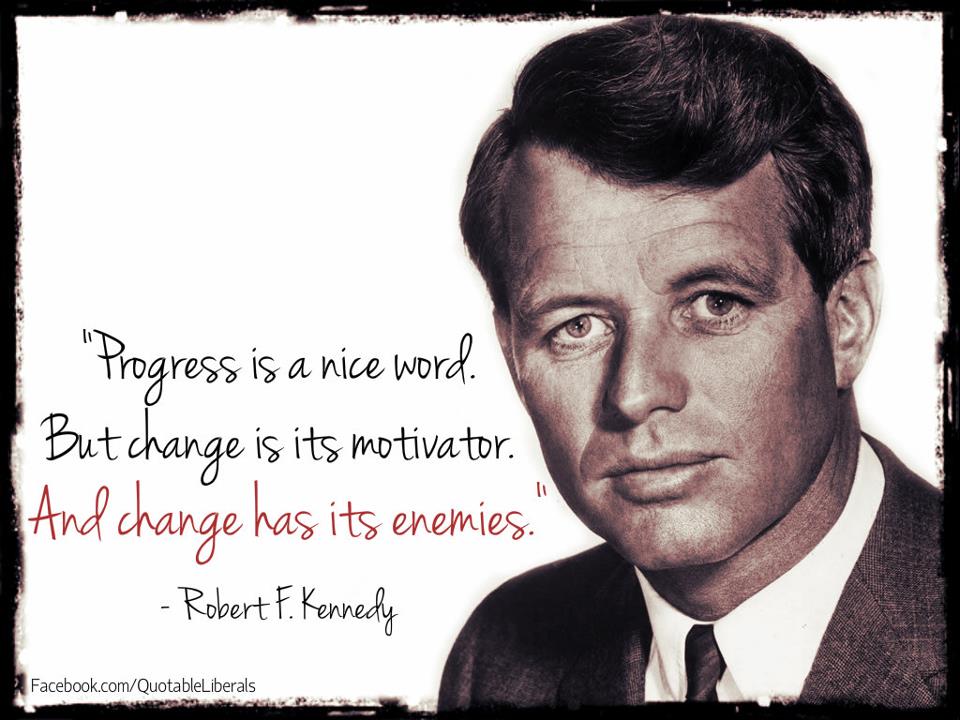
“For we have heard him say this Jesus of Nazereth will destroy this place and change the customs Moses handed down to us.” As the late attorney general and assassinated presidential candidate Robert Kennedy once observed, “Progress is a nice word. But change is its motivator, and change has its enemies.” Things were much the same way during the time of the early Church, and Stephen was a prime example. The followers of Christ, from the Twelve on down to the lowliest orphan, were the polar opposite of the way the world was and is, as opposed to the way Jesus said things should be. The Roman Empire ruled from the top down in a hierarchical – that is, predatory – management arrangement. Bully authority ruled the day back then, and things are much the same today. It's just that today they have much better weapons, and it's all been computerized.


But besides an entirely new way of organization, which bears some similarities to the “sharing economy” that's just starting to get rolling along in the present day, there was another thing about Christ that threatened the Sanhedrin's influence. Jesus exposed the extreme corruption of the high priests, scribes and teachers of the Law. You will recall when we studied Luke's gospel from some time ago, how Jesus threw the money changers out of the Temple and overturned all their table and chairs? The reason was because of the requisite sacrifices that had to be made as specified by what was then called the Law of Moses, or the Old Testament as we know it today. These sacrifices were live animals, primarily sheep, oxen or goats. But when the livestock was brought to the temple, the ruling elites would oftentimes force the unlucky faithful to buy a sacrificial animal in place of their own, rejecting their animals for frivolous reasons. As a result, the temple was converted into a very profitable enterprise, to the complete consternation of Christ, as you all know, not to mention all his followers. It's a good thing Jesus did away with all that by making himself the sacrifice at Calvary. In modern times, the animal rights activists would be completely up in arms at such a spectacle!


“All who were sitting in the Sanhedrin looked intently at Stephen, and they saw his face was like the face of an angel.” At this point, Stephen is being accused of crimes that carried the death penalty. His very life is at stake as he finds himself dragged before a kangaroo court with an angry mob for his accusers. Most of us would be angry, humiliated and probably feeling pretty defensive too. Yet Steven is standing there before the court, undoubtedly in chains and surrounded by people who want to kill him, and he is in total ecstasy! He doesn't care that he's going on trial for what amounts to heresy and blasphemy in the eyes of his Jewish captors. The fact that Steven was himself of Jewish heritage was actually working against him. But the one thing that was working against him the most was his unwavering faith in Christ. And next week, we will take up where we left off as we start on part 1 of Acts chapter 7, where the inspiring story of Steven continues in dramatic fashion, as a 2,000 year old courtroom scene plays out for all posterity to see. Until then, pray every day as often as you can. The more prayers, the more results. Shalom....


Sunday, April 8, 2018

Putin's re-election, Bible prophecy, and the upcoming Middle Eastern war

Putin's Re-election and Bible Prophecy:
Closing In on Armageddon
by Pastor Paul J. Bern
[Ezekiel chapters 38 & 39, part 3]
For better small screen viewing click here :-)


Last week as we finished part 2 of this 3 part series on the Biblical significance of Vladimir Putin's re-election as president of Russia, we left off at Ezekiel chapter 39 and verse 6 (for anyone who missed part one, click here). In the first 6 verses of chapter 39, God declared through his servant Ezekiel that all the military forces that would swoop down from the far north, as well as most of the Islamic nations of the horn of Africa and Libya, will be stopped in their tracks by a series of natural disasters, starting with the troops being pelted by huge hail stones as well as by fire sent from God. The Bible doesn't specify the origin or nature of this fire. It only says in verse 6, “I will send fire on Magog and on those who live in safety in the coast lands....” This could be anything from being trapped in a wildfire, or series of wildfires, to a huge fire-fight of some kind or another, all the way up to nuclear warfare. There's simply no way to tell for sure, but I would not be surprised at all if this war were to go nuclear.


This week as we move on to the third and final part of this series on current events juxtaposed with Biblical prophecy, we'll be starting at verse 8 of chapter 39. “It is coming! It will surely take place, declares the Sovereign Lord. This is the day I have spoken of. Then those who live in the towns of Israel will go out and use their weapons for fuel and burn them up – the large and small shields, the bows and arrows, the war clubs and spears. For seven years they will use them for fuel. They will not need to gather wood from the fields or cut it from the forests, because they will use the weapons for fuel. And they will plunder those who plundered them and loot those who looted them, declares the Sovereign Lord.” (Ezekiel 39, verses 8-10)


This massive war is most assuredly coming, definitely and without question! Although a first-time reader may not believe this, if God says it's going to occur, then it's going to occur; it's only a question of timing. Turkey, Iran, Syria and Iraq, together with mercenaries from the Russian Islamic republics, will attack Israel from the north and the east in a gigantic pincer attack. But they will be driven back, and Russia will have to come and bail them out since Iran and Syria are Russian allies. It is that precise day that the prophet Ezekiel was writing about! When Russia comes to the aid of Syria and Iran, they will fall back to a mutually agreed upon rendezvous point before mounting a huge counterattack on Israel and her people. Again, as before, they will be defeated, but this time by the forces of nature as described in detail in these passages of Scripture.


“Then those who live in the towns of Israel will go out and use their weapons for fuel and burn them up – the large and small shields, the bows and arrows, the war clubs and spears. For seven years they will use them for fuel.” Now let's understand right here that this is written from the viewpoint of a man who lived at least 2,600 years ago. So he is writing to his contemporaries as well as for posterity and, most of all, out of obedience to God. Ezekiel is describing weapons as he understood them from his own time frame. Shields, bows and arrows and spears were the weapons of his day. Today, everything is motorized and digitized, so it appears the fuel from all the tanks, amphibious assault vehicles and all kinds of trucks of various sizes and purposes will be used instead. Tires will be burned in big piles to enforce road blocks and in small ones for cooking and burning trash. This is a likely scenario that fits with what Ezekiel wrote, as dictated to him by the “Sovereign Lord”, or Almighty God.


“They will not need to gather wood from the fields or cut it from the forests, because they will use the weapons for fuel. And they will plunder those who plundered them and loot those who looted them, declares the Sovereign Lord.” In this verse, I'm fairly sure that Ezekiel is referring to the wooden gun stocks on all the rifles the troops from the Russian confederation carried with them into battle. Since the homes of many will have been destroyed by the war, the wooden gun stocks of the Russian, Syrian, Turkish and Iranian troops will be used for campfires, along with the tires and fuel from their vehicles. In this way, the comfort of the Israeli people will be seen to even during this traumatic time to come, because that is what God will do for his people Israel. Their every need will be met, even in the rubble of an earthquake and a military invasion. And now let's move on to part 2 of this week's message, starting at verse 11.


“On that day I will give Gog a burial place in Israel, in the valley of those who travel toward the sea. It will block the way of travelers, because Gog and all his hordes will be buried there. So it will be called the Valley of Hamon Gog. For seven months the house of Israel will be burying them in order to cleanse the land. All the people of the land will bury them, and the day I am glorified will be a memorable day for them, declares the Sovereign Lord.” (Ezekiel 39, verses 11-13)


This will be the fate of all the troops from Russia, her allies, and the other countries I mentioned who would presume to attack Israel. “The valley of those who travel towards the sea” is an ancient expression for the Jordan valley that runs between the Sea of Galilee southward towards the Dead Sea. And so according to the Scriptures, this is where the armies of the Gog-Magog War of Ezekiel 38 and 39 will be buried. It will take 7 months to bury all the dead because there will be so many of them, and the entire populace will be pressed into service for this arduous task, presumably to expedite things for health reasons. But what is so understated is that the tiny little nation of Israel, a country the size of New Jersey with a population of 8.4 million people, just defeated the combined armies and air forces of Russia, Iran, Syria, and Turkey, and you may as well include Iraq and Jordan in the fray. Their combined military forces will be decimated by Israel and her ally, the Sovereign Lord!


There is one more thing that needs to be said about this, and that is regarding the country of Israel itself, together with her people. There are many individuals who, frankly, despise the nation of Israel and her people. Some say that this is because of the conflict between the Palestinian and Israeli people, but there is more to it than that, and it has a long history. It was the newly created universal church of King Constantine 1st, from which the modern name 'Catholic' originates, that began teaching around the year 300AD that it was the Jews and not the Romans who crucified Christ, when in fact it was the other way around. Nevertheless, this wrong teaching has persisted to this day. While the first reason for hatred of the Jews was religious in origin, the second reason was and still is racial. Antisemitism – the extreme hatred of Jewish people and all things Jewish, including her homeland Israel – is raw racism, pure and simple. But more than that, since Jesus Christ walked the earth as a Jewish man, to express antisemitism is tantamount to having contempt for Jesus Christ. Adolf Hitler's Nazi Germany is one of the most glaring examples in human history of what happens when antisemitism is carried to its utmost extreme.


This inevitably brings up the debate about what the fate of the Palestinian people should be. Should they get their own homeland? Of course they should, but so should the Kurdish people just a few hundred miles to the north, but they're not having any luck either. Arbitration is the only fair way to settle both these disputes, that much is certain, and both conflicts must be peacefully resolved. One other thing is certain – the Gog-Magog War of Ezekiel chapters 38 and 39 (of which I only used select portions for the sake of brevity and focus) will occur. But more than that, the stage is being set even as I write this for this massive and incredibly deadly war. Russia has forward bases in Syria and Iran, plus a critically important naval port in Syria, and has still more troops – many more – just to the north in Georgia and the Ukraine. I think we'll have to see what happens once the American embassy moves from Tel Aviv to Jerusalem, which coincides with the 70th anniversary of the founding of the nation of Israel on May 14th, 1948. I would be quite surprised if this anniversary comes and goes without incident. You know, like a 7-year peace treaty that divides Jerusalem?

Wednesday, March 8, 2017

This week's Bible study will be the 1st half of Luke chapter 10

Jesus Sends Out the Seventy-two
[Luke chapter 10, verses 1-21]


Last week when we closed out chapter 9 of Luke's gospel, Jesus was relating to many the cost of being his follower and believer. His instructions are abundantly clear – we must either follow Jesus exclusively, above and beyond anything and anybody else, or not at all. There is no such thing as an 'in between' or a 'maybe' when it comes to worshiping Jesus as the Son of God and being his follower – which we do by obeying his commandments. Jesus was asked about this very thing during the course of his ministry. When asked about which commandment was the greatest, Jesus replied, “Love the Lord your God with all your heart and with all your soul and with all your mind. This is the first and greatest commandment. And the second is like it: Love your neighbor as yourself. All the law and the prophets hang on these two commandments” (Matthew 22, verses 37-40). So if we set our minds on these two integral commandments continuously, we will all be well on our way to becoming true followers of the Lamb of God! Today as we move on to chapter 10 of the gospel of the apostle Luke, we find Jesus imparting these very things as he sends out his Seventy-two, as they are now called, to preach and teach the good news of Jesus' coming. So let's begin at verse one.


“After this the Lord appointed 72 others and sent them two by two ahead of him to every town and place where he was to go. He told them, 'The harvest is plenty, but the workers are few. Ask the Lord of the Harvest, therefore, to send out workers into the harvest field. Go! I am sending you like lambs among wolves. Do not take a purse or bag or sandals; and do not greet anyone on the road. When you enter a house, first say, 'Peace to this house'. If a man of peace is there, your peace will rest upon him; if not, it will return to you. Stay in that house, eating and drinking whatever they give you, for a worker deserves his wages. Do not move around from house to house.'” (Luke 10, verses 1-7)


“The harvest is plenty, but the workers are few. Ask the Lord of the Harvest, therefore, to send out workers into the harvest field.” Send more workers! That's us, everyone! How do we work in the harvest field Jesus described? By telling as many others about him as we can. Sometimes this is accomplished with our words, but many other times it can be by our actions. Since not everyone can be a pastor, evangelist or even a counselor, the best way to go about this is on an individual basis. Tell people about Christ and what he has done for you, especially the part about having eternal life because Jesus rose from the dead ahead of all of us. Some will receive your message of faith, while others will outright reject it. Expect that – it comes with the territory. Think of telling others about Jesus as being like making a sales call, except that we don't ask for anyone's money. The more calls you make, the more successful you will be.


Just to clarify my point, this doesn't necessarily mean we all have to turn into extroverted salespeople to be effective servants of God. Oftentimes, 'loving our neighbor as ourselves' is the most effective way we can witness for Jesus. Which is better – to make a religious speech in front of 1,000 strangers, or to make peanut butter and jelly sandwiches for 10 hungry and homeless children? I don't know about you, but I think the Lord would look more favorably on the second choice than the first one. Since there was no technology like we have today, news traveled by word of mouth, particularly since illiteracy was widespread back then. Since these 72 apostles acted as preachers, teachers and news reporters all at once, Jesus charged them as follows: “Go! I am sending you like lambs among wolves. Do not take a purse or bag or sandals; and do not greet anyone on the road. When you enter a house, first say, 'Peace to this house'. If a man of peace is there, your peace will rest upon him; if not, it will return to you.'” 'Don't rely solely on yourselves when you preach the gospel', Jesus instructed them. 'Rely on me'! The very same thing is still true today because Jesus is eternal like his Father, never changing and always consistent! Jesus also instructed them to 'not greet anyone on the road'. Jesus was telling them to talk only to those who would listen, and to rely on his Spiritual guidance for discernment in this area.


“Stay in that house, eating and drinking whatever they give you, for a worker deserves his wages. Do not move around from house to house.” Notice this is exactly the opposite of what are proudly displayed as “American values” – the Seventy-two were instructed to be dependent on their hosts for their sustenance, whereas here in America we are 'rugged individualists' and 'independent persons'. Americans depend on no one, we stand alone, and we're king of the hill! This is diametrically opposed to the instructions of our Lord and Savior, and if America does not collectively repent of this, together with its so-called “exceptional-ism” – which has its roots in racism and alleged “white supremacy” – I prophesy it will be her undoing! The Seventy-two, instead of having their own resources – they didn't even carry luggage or a purse! – relied on the Holy Spirit, who prompted the hosts of these apostles to supply their needs. Their needs were met Spiritually instead of materially. Also, since they carried no purses, this meant they weren't permitted to turn anything more than a minimal profit from their ministries, if any at all. I find there is a very stark contrast between that and today's “prosperity gospel”, which alleges that Jesus wants everybody to be rich. This, ladies and gentlemen, is a lie from the stinking pits of hell!! Enough said about that. And now let's move on to part 2 of today's lesson, beginning at verse 8.


“When you enter a town and are welcomed, eat what is set before you. Heal the sick that are there and tell them, 'The kingdom of God is near you.' But when you enter a town and are not welcomed, go into its streets and say, 'Even the dust in your town that sticks to our feet we wipe off against you. Yet be sure of this: The kingdom of God is near.' I tell you, it will be more bearable on that day for Sodom than for that town. Woe to you, Korazin! Woe to you, Bethsaida! For if the miracles that were preformed in you were performed in Tyre and Sidon, they would have repented long ago, sitting in sackcloth and ashes. But it will be more bearable for Tyre and Sidon at the judgment than for you. And you, Capernaum, will you be lifted up to the skies? No, you will go down to the depths! He who listens to you listens to me; he who rejects you rejects me; but he who rejects me rejects Him who sent me.” (Luke 10, verses 8-16)


Again, as before, Jesus instructed the Seventy-two to conduct themselves in the course of their ministries in a way that is completely contrary to the way some churches are operated today. Although this is not universally true by any means, many pastors draw very comfortable salaries for themselves compared to the working people they often minister to. While this is particularly true in large churches, when it comes to small churches, the pastors oftentimes have a day job Monday through Friday while drawing no salary from the church to keep it solvent. But the Seventy-two apostles did none of the above. They ate whatever food was set before them. They didn't exactly order from a menu. The Seventy-two did not draw salaries, did no work except to preach and teach, and expected nothing in return. Ordinarily, people would say this is a 'losing proposition', but not in God's kingdom! Evidently, the Seventy-two got all their needs met. Nobody died of hunger or thirst – on the contrary, all their needs were met by those they ministered to, whether it was food, clothing, shelter or any kind of financial assistance, and it was all done voluntarily. Also, notice that at no time was anyone asked to tithe 10% of their income. In fact, tithing is only mentioned in the New Testament in reference to the Pharisees, the same religious rulers Jesus prophesied against.


“But when you enter a town and are not welcomed, go into its streets and say, 'Even the dust in your town that sticks to our feet we wipe off against you. Yet be sure of this: The kingdom of God is near.' I tell you, it will be more bearable on that day for Sodom than for that town'.” 'Whoever rejects you', Jesus instructed the Seventy-two, 'rejects me'. Moreover, as Jesus taught the apostles in our study of the previous chapter, “Whoever rejects me rejects the One who sent me.” It's a free country we live in, so people are free to reject God if they insist on doing so. I will not stand in their way. In fact, having brought those individuals the Gospel of Jesus over the Internet, I have fulfilled my duty to the Lord my Savior. Whether others accept or reject my message is entirely up to them. This is the essence of what Jesus meant when he mentioned towns like Korazin, Bethsaida and Capernaum. These were all towns where Jesus had preached and performed miracles, but the people still rejected him. All these cities are little more than ruins today, especially Capernaum. And now let's conclude this week's study starting from verse 17.


“The Seventy-two returned with joy and said, 'Lord, even the demons submit to us in your name.' He relied, 'I saw Satan fall like lightning from heaven. I have given you authority to trample on snakes and scorpions and to overthrow all the power of the enemy; nothing will harm you. However, do not rejoice that the spirits submit to you, but rejoice that your names are written in heaven.' At that time Jesus, full of joy from the Holy Spirit, said, 'I praise you, Father, Lord of heaven and earth, because you have hidden these things from the wise and learned, and revealed them to little children. Yes, Father, for this was your good pleasure.'” (Luke 10, verses 17-21)


The Seventy-two had put their commission and their faith into action, and look what happened! They “returned with joy”, which was immediately followed by the equivalent of Jesus telling them, 'You ain't seen nothing yet!' But note what he says next; “...do not rejoice that the spirits submit to you, but rejoice that your names are written in heaven.” That, ladies and gentlemen, is Jesus' entire point which the apostle Luke has conveyed to us by sharing his version of the Gospel. Whether any individual serves the Lord as a pastor, elder, Sunday school teacher, or as an usher or even a janitor does not matter. The names of each and every one of those I have mentioned, plus any I may have forgotten, are “written in Heaven”! Everybody gets the same reward, which is eternal life! And then Jesus thanks his heavenly Father, remarking as he prayed that, “...you have hidden these things from the wise and learned, and revealed them to little children.” The “wise and learned” Jesus was referring to were the Pharisees and Sadducees, the religious establishment of that time. The “little children”, are anyone who would humble his or her self and submit to Christ, making him the Lord of their life instead of themselves. We are to put Jesus in charge and trust him to lead us down the right path in our lives, just like little kids willfully following their parents. On that note, I think I'll concluded this week's lesson, and next week we'll explore the second half of chapter 10.