Showing posts with label faith. Show all posts

Sunday, November 4, 2018

It's More Blessed to be Poor in God's Sight Than It Is To Be Rich

Those Who Are Living Paycheck to Paycheck
Are More Blessed Than They Realize
by Pastor Paul J. Bern
To view this on my website, click here :-)



I don't have to explain what's been happening to the US Middle Class over the last 35 years or so. Many people who used to be Middle Class in America are now poor. I should know, since I used to make a whole lot more money than I do now. But that was before the bottom fell out of everything. I've been there, done that and bought the T-shirt. Everyone is lamenting because they're living paycheck to paycheck and they don't know what to do about it. Going to the ballot box, so far, has produced an exacerbation of America's political problems – exactly the opposite of what is intended. Now we have people talking about civil war, and America's citizens are emigrating at record levels. The ones who are staying are buying guns and ammo at record levels. No wonder everyone is so tense and on edge!


That's why the purpose of this week's message is to console those who are angry and hurt, to counsel those who have been pushed aside or shown the door without just cause, and to reassure the frightened and confused. It's not hard to get pretty befuddled about current events. We live in a world of mass shootings in schools, work places, grocery stores and even churches – or synagogues, as was the case recently. Things have gotten so bad that we can't even attend church or go out for a movie without having to be alert for anyone carrying a weapon. There is a good side to being poor, and a positive thing about being oppressed, according to the Word of God (or the Bible, if you prefer). Allow me to cite a few examples from Scripture.


My first example is that of the apostle James, who was a very astute individual, and so his writings are something to take very seriously regardless of one's religious beliefs – or even a lack thereof. These words can still be beneficial regardless of faith. “5) Listen, my dear brothers and sisters: Has not God chosen those who are poor in the eyes of the world to be rich in faith and to inherit the kingdom he promised those who love him? 6) But you have dishonored the poor. Is it not the rich who are exploiting you? Are they not the ones who are dragging you into court? 7) Are they not the ones who are blaspheming the noble name of Him to whom you belong? 8) If you really keep the royal law found in Scripture, 'Love your neighbor as yourself,' you are doing right.” (James 2, verses 5-8)


Take heart if you are poor or otherwise financially hard pressed! Contrary to what many think and say, there is no shame in being poor. I was pretty well off at one time myself, mainly back in the 1990's through most of that decade, wrapping around to the early 2000's. I know what it's like to earn a six figure income, and to have to meet a payroll every week. But those days are gone for good, and there's little I can do about it except to keep on writing. I live on my small pension check, plus a little extra each month when I sell a book or two, and I've come to terms with that. But, what James wrote is even more true today than back then: “Is it not the rich who are exploiting you? Are they not the ones who are dragging you into court?” The student loan crisis is one modern example of this, foreclosures are another, and the so-called Drug War is yet another. Over half the people in state and federal prison are there for nonviolent drug offenses. America spends entirely too much money locking up all the wrong people.


Has not God chosen those who are poor in the eyes of the world to be rich in faith and to inherit the kingdom he promised those who love him?” If you're poor, mentally depressed and running low on hope, then heed these words of the apostle James, the half-brother of Christ. To say this another way, it's better to be rich in faith than rich with worldly goods, and it's better to be poor in worldly goods than it is to be poor in faith. “If you really keep the royal law found in Scripture, “Love your neighbor as yourself,” you are doing right.” The much-beloved phrase, “Love your neighbor as yourself” is found first in Leviticus 19: 18, and it was an admonishment from the Lord Almighty to us all, that there be no hate among us – none at all! Judging by the racial tensions that simmer all across America, I'd say we have our work cut out for us as far as loving our neighbors – regardless of color.


Jesus himself was more blunt and direct than James in Luke's gospel when he said: “20) Looking at his disciples, he said: 'Blessed are you who are poor, for yours is the kingdom of God. 21) Blessed are you who hunger now, for you will be satisfied. Blessed are you who weep now, for you will laugh. 22) Blessed are you when people hate you, when they exclude you and insult you and reject your name as evil, because of the Son of Man. 23) Rejoice in that day and leap for joy, because great is your reward in heaven. For that is how their ancestors treated the prophets. 24) But woe to you who are rich, for you have already received your comfort. 25) Woe to you who are well fed now, for you will go hungry. Woe to you who laugh now, for you will mourn and weep. 26) Woe to you when everyone speaks well of you, for that is how their ancestors treated the false prophets.'” (Luke 6, verses 20-26)


The world's poor, sick and disabled, Jesus was saying, will be the first through the gates of heaven. If you hunger, you will be filled by Christ, not by McDonald's – Jesus guarantees it. Weep all you want for now, Jesus was saying, because in the end He will give us life and laughter everlasting. The more people hate you because of me, Jesus was teaching them, the greater your reward will be. So, let others hate you just because you will not hesitate to make a stand for Christ. Never mind Republican or Democrat, conservative, liberal or progressive – they all pale in comparison to the Spirit of our Lord and Savior. But in verses 24 and 25, Jesus taught that anyone who enriches themselves in this life does so at the expense of another, and those wealthy individuals risk paying an eternal price for being selfish beyond reason while others went hungry. Verses 24 through 26 could also be interpreted as a prophecy against America, but that would be another message for another time.


So, I want everyone reading this who is going through a hard time financially – and that would be the majority of you – to take heart in their situation. Granted, you are suffering and miserable, I know how you feel. But take it from a guy who's been there, you can and will survive the ordeal you are currently undergoing. If you can't raise your income, then find ways to cut your expenses. The main thing is knowing that Jesus is walking beside you in every conceivable way, every step of the way.


Sunday, May 6, 2018

Weekly commentary will return next week. Enjoy today's guest post.

Today's guest column is from David Allan of CNN. Weekly commentary will return next week.


Which side of ourselves will prevail?
By © David G. Allan, CNN; November 16, 2016
Story highlights
  • Every day, we have the opportunity to embrace a darker path or to act in a helpful and hopeful way
  • Anger is often triggered by other emotions such as fear, rejection or desperation
This essay is part of a column called The Wisdom Project by David Allan, editorial director of CNN Health and Wellness. The series is on applying to one's life the wisdom and philosophy found everywhere, from ancient texts to pop culture. Don't miss another Wisdom Project column; subscribe here.


(CNN) "A fight is going on inside me," said an old man to his grandson. "It is a terrible fight, and it is between two wolves, one good and one bad”. So goes a version of a traditional Cherokee legend (or a modern Billy Graham story).
The first wolf embodies emotions and vices such as hate, greed, arrogance, dishonesty, anger, false pride, superiority and ego. The other wolf represents values and virtues such as peace, love, hope, serenity, humility, kindness, empathy, generosity, truth and compassion.
The grandson considers the metaphoric battle and asks, "Which wolf will win?"
The grandfather answers, "The one you feed."


This struggle is ours. Every day, we have the opportunity to embrace a darker path or to act in a more helpful and hopeful way.
The same struggle is sometimes evident in entire nations, which can be deeply divided along a number of overlapping fault lines: political, socioeconomic, racial, gender.
This story holds a mirror up to ourselves, individually and collectively. And we should take a long look in it. If we're honest about the struggle and understand it more, we can begin feeding one wolf over the other.


Starve one wolf

The feeling of anger or the impulse of greed is often triggered by other emotions such as fear, rejection or desperation. Often, we're not even aware that secondary emotions like anger have a deeper root cause. "Fear is the path to the dark side," Yoda explains in one of the "Star Wars" films. "Fear leads to anger. Anger leads to hate. Hate leads to suffering."
The first step in managing your emotions is simply being more aware of them. Ask yourself what triggers them. Look at your life experience for clues to how you react.
And of course, in some circumstances, anger and even hate are justified, perhaps useful. We should be angry at disparity. We should hate injustice.


But whether an emotion is justified or not, negative emotions often lead to negative actions. If you take a primary feeling like fear or uncertainty and avoid turning that into hate, you are less likely to act in a hateful way. Embrace the feelings, but guide them toward the good.
"I can't choose how I feel, but I can choose what I do about it," explained the late Andy Rooney, the Yoda of television news magazines.
You are also in control of your social and media influences. If you are barraged with messages of hate and bitterness, they will more easily impinge on your self-control. It's important to stay informed, but be wary of listening to those who are in the business of feeding angry wolves.


Feed the other wolf


Staying in a positive and empathetic head-space is challenging, especially in times of stress, but again, being mindful of your emotions is vital.
And just as hatred and closed-mindedness can eventually lead to acts of violence, love often leads to acts of peace and kindness.
Committing ourselves to sustaining such action is the way to personal and institutional progress. Seek out and employ strategies to staying committed to something over time, whether it's the repetition-and-reward of a new habit or the tracking of a New Year's resolution.


What feeding the good wolf looks like, practically, can include these actions:
Send a positive message. Whether it's on your Facebook feed or in conversations, communicate the good, the hope, the love.
Get involved. Give money or time, as you can, to a cause or effort that will use it to amplify positive change. It doesn't need to be political, either; it could be supporting public media or improving the environment or literacy, or an organization supporting folks who need financial help or are sick.
Share love. Make a list of 12 people in your life and check them off as you express in a conversation, email or letter how important they are to you.
Listen. We all need to be heard. Take a little more time and really give your attention to others. Listening is love, and it naturally creates bonds of empathy and support.
Help someone you know. Identify one person among your friends and family who is particularly struggling, and understand more about what they need and how you can help.
Be kind to strangers. Kindness is contagious, a fact backed by real science. Be a patient zero to everyone you come across.
Add to this list, and share. Come up with more things you can do to increase the total amount of goodness and positivism in the world, do some of those things and share those ideas with others.


We can fix everything that's wrong with us by what's right with us. And to crib another presidential campaign line, we are the change we've been waiting for.


Don't miss another Wisdom Project column by subscribing here.
This call to action is echoed by a lyric in the song "Man in the Mirror," by Michael Jackson, who arguably struggled with his own inner wolves. "If you wanna make the world a better place, take a look at yourself, and then make a change."


Wednesday, April 25, 2018

This week's ongoing Bible study will be Acts chapter 6

The Delegation of Duties and the Arrest of St. Steven
[Acts chapter 6]
For better small screen viewing, click here :-)


Last week when we concluded our study and analysis of part 3 of Acts chapter 5, we closed out with the apostles as they left the Sanhedrin after being released from custody for preaching and teaching in the Name of the Son of God. They were rejoicing after having been flogged, and for spending the night in jail for proclaiming that Jesus Christ had died and then rose again in order to save humanity. This week as we move on to chapter 6, we will find it is actually a segue into the inspiring story of Stephen, an early Church leader who achieved martyrdom without even trying. So let's begin our study of this week's lesson starting at verse 1, and I quote:


In those days when the number of disciples was increasing, the Grecian Jews among them complained against the Hebraic Jews because their widows were being overlooked in the daily distribution of food. So the Twelve gathered all the disciples together and said, 'It would not be right for us to neglect the ministry of the Word of God in order to wait on tables. Brothers, choose seven men from among you who are known to be full of the Spirit and wisdom. We will turn this responsibility over to them and will give our attention to prayer and the ministry of the Word.' This proposal pleased the whole group. They chose Stephen, a man full of faith and the Holy Spirit; also Philip, Procuras, Nicanor, Timon, Parmenas, and Nicolas from Antioch, a convert to Judaism. They presented the men to the apostles, who prayed and laid their hands on them. So the Word of God spread. The number of disciples increased rapidly, and a large number of priests became obedient to the faith.” (Acts 6, verses 1-7)


A lack of maturity among a sizable portion of humanity is nothing new, and the same goes for church gatherings of all types. The early Church was no exception, as we can see from this first verse of the above passage. But the complaints of the Greek and Israeli Jews against one another are, to me, a side issue compared to what else is mentioned in that same verse – daily food distribution. As I pointed out back in Acts chapter 4, the early Church operated like a social democracy. When people were converted to Christianity as it was originally intended, those who owned property or other riches sold them and brought the proceeds to the apostles on a voluntary basis. That money was used to provide food, clothing and as a referral for shelter arrangements to anyone who had a legitimate need. Remember too, this was back in the day before government usurped this responsibility so public welfare could be introduced. There was no unemployment or disability available either. Since the need was so great, there was also a complete lack of discrimination to this unconditional help, and so occasionally disagreements would break out.


By this time, the Church was going through growing pains, and its rate of expansion was outrunning the abilities of the Twelve to keep up with things. So here, then, we have the first instance of the delegation of authority among the greater Church, like the first division of a single cell into two. Today, that same Greater Church has well over 2 ½ billion members! But to get back to today's lesson, the delegation of authority was given to seven men, starting with Steven, who we will get to shortly. So they chose “seven men from among (them) who are known to be full of the Spirit and wisdom. We will turn this responsibility over to them and will give our attention to prayer and the ministry of the Word.” Food is important, everyone has to eat, but taking care of this had become a distraction instead of a ministry. Still, since the need was so critical back then, with the overwhelming majority of people being trapped in poverty, the most trustworthy men were appointed to oversee this task. Evidently no women were chosen out of security concerns, not because of what we would call gender bias. And now let's move on to part 2 of today's lesson, beginning at verse 8.


Now Stephen, a man full of God's grace and power, did great wonders and miraculous signs among the people. Opposition arose, however, from members of the Synagogue of the Freedmen (as it was called) – Jews from Cyrene and Alexandria as well as the provinces of Cilicia and Asia. These men began to argue with Stephen, but they could not stand up against his wisdom or the Spirit by whom he spoke. Then they secretly persuaded some men to say, 'We have heard Stephen speak words of blasphemy against Moses and against God.' So they stirred up the people and the elders and the teachers of the law. They seized Stephen and brought him before the Sanhedrin. They produced false witnesses, who testified, 'This fellow never stops speaking against this holy place and against the law. For we have heard him say this Jesus of Nazereth will destroy this place and change the customs Moses handed down to us.' All who were sitting in the Sanhedrin looked intently at Stephen, and they saw his face was like the face of an angel.” (Acts 6, verses 8-15)


Who in verses 8 and 9 are the Synagogue of Freedmen? This is what eventually became the Freemasons, although it went through quite a few changes along the way. Today Freemasonry is generally associated with the Occult, which is the polar opposite of Christianity and everything Jesus stood for. Some well-meaning Christians have been misled into believing the Masons are a Christian organization, but they are Christian in name only. For these reasons, I advise against joining them, and I would advise Christians who are currently Freemasons to strongly reconsider their membership. As for myself, it's Jesus and him alone for me. I don't need to belong to the Masons to prove my loyalty for Christ, and neither should you!


Stephen's passion for Christ was so evident that these men from the 'Synagogue of Freedmen' became very irritated with him to the point of being verbally abusive – at first. But as our text says, Stephen was simply too smart for his opposition. So they set him up to take a fall – a permanent one. “Then they secretly persuaded some men to say, 'We have heard Stephen speak words of blasphemy against Moses and against God.' So they stirred up the people and the elders and the teachers of the law.” So what we have here is a 1st century equivalent to a combination propaganda and smear campaign, and it was all aimed at Stephen! As we read in the above passage of scripture, this ultimately became a lynch mob. “They seized Stephen and brought him before the Sanhedrin. They produced false witnesses....” The prosecution of Stephen before the Sanhedrin – the same Sanhedrin that handed Jesus over to Pilate and who had flogged the apostles twice (so far) for teaching that Jesus was in fact the Messiah – was going to go in much the same fashion as before, except that Stephen vigorously defended himself and his faith, and he did so brilliantly, as we will see.


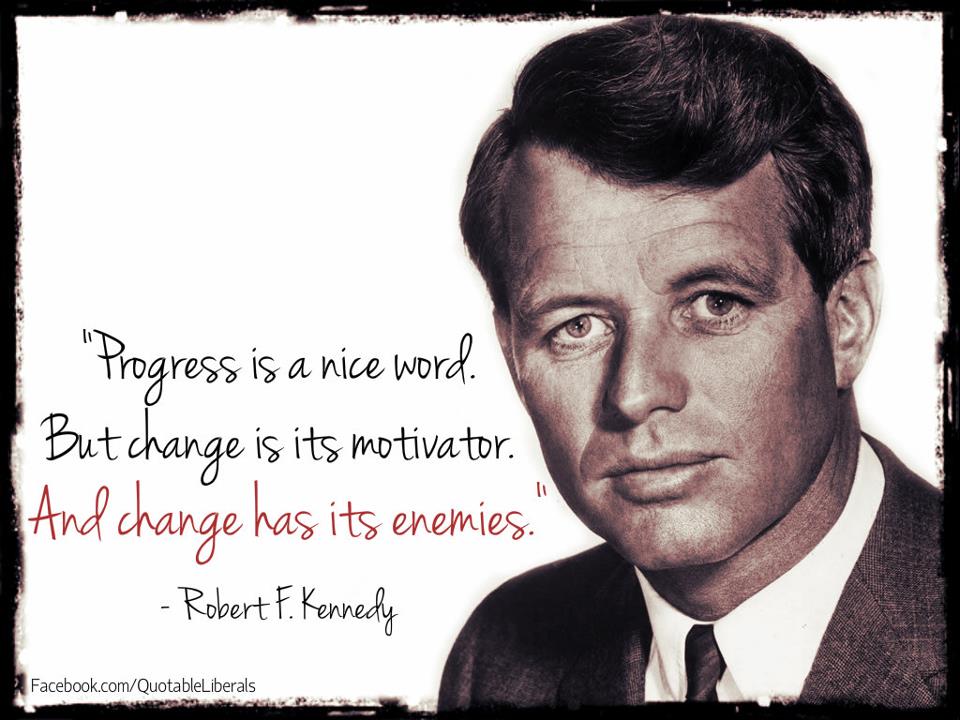
For we have heard him say this Jesus of Nazereth will destroy this place and change the customs Moses handed down to us.” As the late attorney general and assassinated presidential candidate Robert Kennedy once observed, “Progress is a nice word. But change is its motivator, and change has its enemies.” Things were much the same way during the time of the early Church, and Stephen was a prime example. The followers of Christ, from the Twelve on down to the lowliest orphan, were the polar opposite of the way the world was and is, as opposed to the way Jesus said things should be. The Roman Empire ruled from the top down in a hierarchical – that is, predatory – management arrangement. Bully authority ruled the day back then, and things are much the same today. It's just that today they have much better weapons, and it's all been computerized.


But besides an entirely new way of organization, which bears some similarities to the “sharing economy” that's just starting to get rolling along in the present day, there was another thing about Christ that threatened the Sanhedrin's influence. Jesus exposed the extreme corruption of the high priests, scribes and teachers of the Law. You will recall when we studied Luke's gospel from some time ago, how Jesus threw the money changers out of the Temple and overturned all their table and chairs? The reason was because of the requisite sacrifices that had to be made as specified by what was then called the Law of Moses, or the Old Testament as we know it today. These sacrifices were live animals, primarily sheep, oxen or goats. But when the livestock was brought to the temple, the ruling elites would oftentimes force the unlucky faithful to buy a sacrificial animal in place of their own, rejecting their animals for frivolous reasons. As a result, the temple was converted into a very profitable enterprise, to the complete consternation of Christ, as you all know, not to mention all his followers. It's a good thing Jesus did away with all that by making himself the sacrifice at Calvary. In modern times, the animal rights activists would be completely up in arms at such a spectacle!


All who were sitting in the Sanhedrin looked intently at Stephen, and they saw his face was like the face of an angel.” At this point, Stephen is being accused of crimes that carried the death penalty. His very life is at stake as he finds himself dragged before a kangaroo court with an angry mob for his accusers. Most of us would be angry, humiliated and probably feeling pretty defensive too. Yet Steven is standing there before the court, undoubtedly in chains and surrounded by people who want to kill him, and he is in total ecstasy! He doesn't care that he's going on trial for what amounts to heresy and blasphemy in the eyes of his Jewish captors. The fact that Steven was himself of Jewish heritage was actually working against him. But the one thing that was working against him the most was his unwavering faith in Christ. And next week, we will take up where we left off as we start on part 1 of Acts chapter 7, where the inspiring story of Steven continues in dramatic fashion, as a 2,000 year old courtroom scene plays out for all posterity to see. Until then, pray every day as often as you can. The more prayers, the more results. Shalom....


Wednesday, April 18, 2018

This week's ongoing Bible study will be part 3 of Acts chapter 5

The Unbreakable Spirit of the Apostles
[Acts chapter 5, verses 29-42]
For better small screen viewing, click here :-)


Last week as we left off at verse 28 of Acts chapter 5, we found Peter, Luke and the other apostles back in trouble again with the rulers of Jerusalem, which was (and still is) the Sanhedrin. They had been found preaching and teaching the Gospel, this time after healing many, which made the temple authorities furious. So they were carried off to jail for disturbing the peace and contempt of court, only to be let out in the middle of the night by an “angel of the Lord” (see chapter 5 verse 19). At daybreak the apostles came to the temple and – once again – began to preach and teach about the Good News of Christ Jesus. There was nothing on earth, nor in heaven or hell, that could stop the apostles from spreading the Gospel!


This week as we take up where we left off, the Sanhedrin has once again been convened in order to put the apostles on trial. Having been found shortly thereafter preaching at the temple, the apostles have been brought back before an enraged Jewish ruling council. It is only after getting a severe dressing down by the head of the council (who at this time was Caiaphas, the same high priest that had handed Jesus over to Pontius Pilate) that the apostles are given a chance to respond. So let's begin our study of part 3 of Acts chapter 5, beginning at verse 29.


Peter and the other apostles replied: 'We must obey God rather than men! The God of our fathers raised Jesus from the dead – whom you killed by hanging him on a tree. God exalted him to his own right hand as Prince and Savior that he might give repentance and forgiveness of sins to Israel. We are witnesses of these things, and so is the Holy Spirit, who God has given to those who obey him.' When they heard this, they were furious and wanted to put them to death. But a Pharisee named Gamaliel, a teacher of the law, who was honored by all the people, stood up in the Sanhedrin and ordered that the men be put outside for a little while.” Acts 5, verses 29-34


“We must obey God rather than men!” Peter and the other apostles time-honored retort is a Biblical example of speaking truth to power! We have a modern word for people who do this – they're called 'whistle-blowers'. Peter and the other apostles were blowing the whistle on the Sanhedrin, that they had in fact taken the Son of God, the promised Hebrew Messiah from the Scriptures, and had put him to death. And so Peter is still identifying who Jesus actually was. “God exalted him to his own right hand as Prince and Savior that he might give repentance and forgiveness of sins to Israel. We are witnesses of these things, and so is the Holy Spirit, who God has given to those who obey him.” Peter was telling the disbelieving Pharisees that the reason they knew Jesus was “the Christ”, or the anointed One, from the very Scriptures from which they taught was because of the Holy Spirit. Moreover, Peter was stating, that same Spirit lived within the hearts and minds of all who believed ever since Pentecost, which at this time had only been several weeks prior. The Pharisees and teachers of the Law found the teachings of the apostles to be very offensive.


When they heard this, they were furious and wanted to put them to death. But a Pharisee named Gamaliel, a teacher of the law, who was honored by all the people, stood up in the Sanhedrin and ordered that the men be put outside.” So here we have the same Sanhedrin, led by the same high priest who had handed Jesus over to be crucified, prosecuting the apostles. Like before with Jesus Christ on Golgotha hill, the ruling council were ready to kill the apostles, only this time without enlisting the aid of their Roman captors. At this time steps forward a man who does something to get his name mentioned in the Bible – a rare honor indeed. Gamaliel, who was our equivalent to a seminary professor, stood up in the middle of the uproar and appealed for calm. Since this was evidently a gentleman of good repute who had earned everyone's respect, everybody listened to him.


Then he addressed them: 'Men of Israel, consider carefully what you do with these men. Some time ago, Theudas appeared, claiming to be somebody, and about four hundred men rallied to him. He was killed, all of his followers were dispersed, and it all came to nothing. After him, Judas the Galilean appeared in the days of the census and led a band of people in revolt. He too was killed, and all of his followers were scattered. Therefore, in the present case I advise you: Leave these men alone! Let them go! For if their activity is of human origin, it will fail. But if it is from God, you will not be able to stop these men; you will only find yourselves fighting against God.'” (Acts 5, verses 35-39)


I'm seeing a couple of different aspects to Gamaliel's speech. First of all, Gamaliel was evidently the only person in the room who suspected that Jesus was the promised Jewish Messiah, meaning he was probably the smartest one of the entire bunch. From time to time there had been people who tried to reestablish the kingdom of Israel in the tradition of King David. All had been Jews, and all had met with violent deaths. 'We crucified this 'Jesus' dude', Gamaliel was saying to his peers, 'but the Movement he represented has lived on and become widespread.' He also pointed out that the followers of the apostles numbered in the thousands, and so if the apostles and their teaching were from God, they should dare not oppose Him. Revolutions and uprisings of various kinds are bound to crop up from time to time, Gamaliel was saying, but if what we now call Christianity was from God – and it most certainly was and is – then the combined forces of the entire Sanhedrin would not be able to stop it. And he was absolutely right.


His speech persuaded them. They called the apostles in and had them flogged. Then they ordered them not to speak in the name of Jesus and they let them go. The apostles left the Sanhedrin, rejoicing because they had been found worthy of suffering disgrace for the Name. Day after day, in the temple courts and from house to house, they never stopped teaching and proclaiming the news that Jesus is the Christ.” (Acts 5, verses 40-42)


In the sometimes-mean old world in which we live, we take solace in the fact that truth and justice will win out in the end. It sure did in this case! “The apostles left the Sanhedrin, rejoicing because they had been found worthy of suffering disgrace for the Name.” Like a resounding verdict at the climax of a courtroom drama, the wisdom of Gamaliel won the day. The apostles were called in and ordered to be flogged, and you can all be sure those floggings were hard and mean. Then they were told, mostly for the record since the Sanhedrin must have known the apostles would disobey it, never to speak in Christ's holy and most revered name ever again. And then came the joyous verdict – after the flogging and our equivalent to a court order; an immediate release!


Did the apostles throw a party to celebrate their victory? No, they went and discharged their duties as ministers and apostles of Christ. “Day after day, in the temple courts and from house to house, they never stopped teaching and proclaiming the news that Jesus is the Christ.” At the very end of each of the gospels there is what we call, “the great commission”, where Jesus, just before he ascended into heaven told the Eleven (Matthias had not yet joined them) to preach the Gospel, “to the very ends of the earth”. This is exactly what the apostles had set out to do, and they were letting nothing stop them from accomplishing their mission. Notice, too, how quickly they put their episode with the Sanhedrin behind them. They didn't let being jailed, or being beaten bloody with whips, or the threat of death itself stop them from their appointed duties. Not as master teachers who had spent three and a half years with the Lord, although they could have legitimately claimed that right. No, the apostles saw themselves as mere servants as they imitated Christ, who washed their feet as the lowliest of servants on the night of the Last Supper. So, if we want to be like Jesus, we must acquire a servant's heart. Let's all spend the remainder of this week working out ways to do that in our own minds that would be pleasing to God. And next week we'll start on chapter 6.

Wednesday, April 4, 2018

This week's ongoing Bible study will move on to part 1 of Acts chapter 5

The Double Edged Sword of the Holy Spirit

Can Either Heal or Condemn
[Acts chapter 5, verses 1-16]
For better small screen viewing, click here :-)


At the conclusion of last week's study when we finished the last of Acts chapter 4, we found out that the organization, purpose and propagation of Christianity was markedly different from that of the modern church. We discovered that the early Church was organized into what we would call today a peer-to-peer network. Moreover, it was a socialistic arrangement as far as meeting the people's needs were concerned. That is, its internal management structure was of a lateral nature rather than hierarchical. Those who were able to work, or who were skilled tradesman or business owners contributed what they could towards the Church's needs, and those who attended from elsewhere helped out financially whenever they could. Today we would call this a nonprofit, but without any government funding. Another thing I want to illuminate right here is that since this was a period when Christianity was criminalized by the Roman Empire, having a building in which to hold their services was out of the question. My point here is that the early Church had no rent or mortgage to pay. There were no utility bills, no Internet bill, and no property taxes to pay. All the funds that were collected – virtually 100% of it – were allocated to take care of the needs of the people, particularly the most vulnerable. There was no tithing as we understand it today. All the gifts were made voluntarily, and nobody was asked to give 10% of their income each week.


For this week's study as we begin chapter five, we will get to see the flip side to this arrangement. What I mean is that I want to show you all in vivid detail what can happen in a worst case scenario when anyone tries to abuse the Holy Spirit of the Risen Lord. I would even go so far as to argue that this is a sacred order of things that was first being put into practice by the first century Christians. And so to abuse or misuse that sacred order, which the Holy Spirit presides over, is to court disaster. So let's get started today at verse 1 of Acts chapter 5. “Now a man named Ananias, together with his wife Sapphira, also sold a piece of property. With his wife's full knowledge, he kept back part of the money for himself, but brought the rest and put it and the apostles' feet. Then Peter said, 'Ananias, how is it that Satan has so filled your heart that you have lied to the Holy Spirit and kept for yourself some of the money you received for the land? Didn't it belong to you before it was sold? After it was sold, wasn't the money at your disposal? What made you think of doing such a thing? You have not lied to men but to God.' When Ananias heard this, he fell down and died. And great fear seized all who heard what had happened. Then the young men came forward, wrapped up his body, and carried him out and buried him.” (Acts 5, verses 1-6)


So the moral of the story here is that nobody, and I mean absolutely no one, trifles around with the Holy Spirit of the Risen Savior and gets by with it. There are no exceptions to this rule at all – absolutely zero! In fact, disobeying this 'rule of the universe' can and does have lethal consequences. Why did Ananias lie about his gift to begin with? One possibility was to help save on his tax bill, and Roman taxes were steep. Problem was, Ananias had to lie to the Holy Spirit and to Rome in order for his plan to succeed. If Ananias would lie to the authorities he would lie to God too. But Peter knew all of this by the time Ananias arrived. By whatever means, including supernatural, Peter was fully aware of Ananias' scheme. And so when Peter confronted Ananias, he apparently died of a massive heart attack or stroke right where he stood. The tragic part is that he died needlessly. All he had to say to Peter was that he had sold the land but needed some of the money to pay off debts, and give Peter the rest. But Ananias failed to take the overwhelming power of the Holy Spirit into account, and that mistake cost him everything, including his place in heaven. Now, let's pick up at verse 7 and see what happens to his wife.


About three hours later his wife came in, not knowing what had happened. Peter asked her, 'Tell me, is this the price you and Ananias got for the land?' 'Yes', she said, 'that is the price'. Peter said to her, 'How could you agree to test the Spirit of the Lord? Look! The feet of the men who buried your husband are at the door, and they will carry you out also.' At that moment she fell down at his feet and died. Then the young men came in and, finding her dead, carried her out and buried her beside her husband. Great fear seized the whole church and all who heard about these events.” (Acts 5, verse 7-11)


If that is the kind of life-and-death power possessed by the Holy Spirit of our Risen Lord, how much more of this power has been stored up over the centuries for those who have yet to see it but believe in it anyway? Moreover, how much more of this awesome power is in store as wrath and rebuke for those who dismiss it? If a simple lie from a married couple can kill, how much more so can murder, adultery or sexual promiscuity, pollution of our environment and the waging of war be killers of our own souls? Sapphira didn't have to lie about the money either. She could have saved her own life just by telling the truth about the money, but she underestimated Peter and the Holy Spirit with which he was filled. Like her husband before her, she collapsed and died right where she stood, and nobody dared say anything about it in Peter's presence. They had already seen the overwhelming power of the Holy Spirit firsthand. If this doesn't put the fear of God into you, better have someone call 911 to come and bring you back to life! And now let's finish today's lesson, starting at verse 12.


The apostles performed many miraculous signs and wonders among the people. All the believers used to meet there in Solomon's Colonnade. No one else dared join them, even though they were highly regarded among the people. Nevertheless, more and more men and women believed in the Lord and were added to their number. As a result, people brought the sick into the streets and laid them on beds and mats so that at least Peter's shadow might fall on some of them as he passed by. Crowds also gathered from the towns around Jerusalem, bringing their sick and those tormented by evil spirits, and all of them were healed.” (Acts 5, verses 12-16)


Here again, as we saw in the beginning of this week's teaching, there are two sides to the Holy Spirit, which was left behind after Jesus rose into heaven. One is a giver of life, healing, peace and balance, and it can save the souls of all who want to be saved by it. The other can instantaneously destroy all who stand against it, or who actively reject it. There is no middle ground with the Holy Spirit of the risen Lord! “No one else dared join them, even though they were highly regarded among the people. Nevertheless, more and more men and women believed in the Lord and were added to their number.” In 21st century English this simply means that no one dared join the first true believers unless they were 200% serious! After what had happened to Ananias and Sapphira, no one dared to tamper around with God.


As a result, people brought the sick into the streets and laid them on beds and mats so that at least Peter's shadow might fall on some of them as he passed by.” By this point, the Holy Spirit anointing was so strong on Peter that he no longer found it necessary to lay his hands upon the sick and disabled, to pray for them and heal them individually. All he had to do was walk by someone while in prayer for everyone in his sight, and they were all healed as he went! If nothing else, Peter – the “born again” Peter, the post Pentecost Peter – was a very efficient worker. No wonder the Lord chose him and the other eleven with him! “Crowds also gathered from the towns around Jerusalem, bringing their sick and those tormented by evil spirits, and all of them were healed.” As things were at the beginning of this week's lesson, so it is at the end. The early Church collected no weekly tithes where they demanded 10% of people's incomes like churches do today, and none of the Twelve, from Peter to Matthias, charged for their services. The churches and evangelists of our modern era, especially the so-called “prosperity” preachers, would do well to relearn these important lessons. Of course, what the apostles were doing was raising the ire of most of the religious authorities. Next week in part 2 of Acts chapter 5, we'll find out how the authorities react to the remarkable success of Christianity in its earliest form, word and deed. See you then....

Wednesday, December 27, 2017

This week's ongoing Bible study will be part 1 of Luke chapter 24

Where Did Jesus Go?
[Luke chapter 24, verses 1-16]
To view this on my website, click here :-)


Last week as we left off at the conclusion of Luke chapter 23, Jesus had just died and been buried in a borrowed grave belonging to Joseph of Arimethia. Although no one saw the significance of this at the time, Jesus being laid in a borrowed grave for 3 days – since that was all he needed it for – confirms what Jesus said earlier in Luke's gospel. In Luke 14, verse 14 it reads, “Although they cannot repay you, you will be repaid at the resurrection of the righteous”. Jesus spoke of this as part of his 'parable of the great banquet'. For the full context, check out Luke chapter 14, verses 12-24. This week as we begin the 24th and final chapter of Luke's gospel, we have a mystery on our hands. The grave that Jesus' body was entombed in has been found empty. Of course, we all know the story of Jesus' resurrection from the dead, but have you ever examined the details involved in this occurrence? Starting this week, and for the next 3 weeks afterward, we'll be doing exactly that as we delve into this week's lesson. So let's plunge right in to the refreshing waters of the Gospel of Luke chapter 24, beginning at verse one.


On the first morning of the week, very early in the morning, the women took the spices they had prepared and went to the tomb. They found the stone rolled away from the tomb, but when they entered, they did not find the body of the Lord Jesus. While they were wondering about this, suddenly two men in clothes that gleamed like lightning stood beside them. In their fright the women bowed down with their faces to the ground, but the men said to them, 'Why do you look for the living among the dead? He is not here; he is risen! Remember how he told you, when he was still with you in Galilee: 'The Son of Man must be delivered into the hands of sinful men, be crucified and on the third day be raised again.' And they remembered his words.” (Luke 24, verses 1-8)


So these women – Luke did not specify how many, but I would say roughly 5 or 10 – have gone to Jesus' borrowed tomb in the predawn hours of the morning to dress his body with spices to alleviate the stench of a decaying human body, as was the custom back in those days. It was the equivalent to modern-day embalming procedures. When they arrived, the large stone that blocked the tomb's entrance had been rolled off to one side. (This rock must have weighed at least 3-5 tons) The size of the tomb's entrance was roughly that of the interior of a minivan – just enough for two men in a crouched position to drag the body that Joseph had wrapped in the cloths (see Luke 23:53) into the cave. “....when they entered, they did not find the body of the Lord Jesus. While they were wondering about this, suddenly two men in clothes that gleamed like lightning stood beside them.” So these women are standing there speechless at the entrance to the tomb peering into an empty grave. They knew they didn't have the wrong grave site because they had followed Joseph and his helpers there after Jesus had been taken down from the cross on which he died.


While they were wondering about this, suddenly two men in clothes that gleamed like lightning stood beside them. In their fright the women bowed down with their faces to the ground....” As these ladies are standing there, presumably with their facial expressions ranging from puzzled to bewildered, the 2 men in shining clothes abruptly appear. Who were these men? Some say the archangels Michael and Gabriel, others teach it was Moses and Elijah. The truth of the matter is that nobody knows, and anyone who insists that they do should be avoided. One thing is for certain – the 2 men were not demonic in nature. “Why do you look for the living among the dead? He is not here; he is risen!” Now I ask you, would demons be overjoyed at our risen Savior and for the fulfillment of Scripture and of the prophets? No way! Demons know Jesus rose from the dead, and the very thought puts terror in their hearts.


Remember how he told you, when he was still with you in Galilee: 'The Son of Man must be delivered into the hands of sinful men, be crucified and on the third day be raised again.' And they remembered his words.” All the times Jesus had told his followers and taught his apostles that he must be handed over to be killed, and then rise from the dead, they must have thought Jesus was talking to them in parables like all the other parables he had spoken. They could not have understood he meant what he said literally. But they definitely understood clearly now. With that in mind, let's move on to the 2nd half of Luke 24 starting at verse 9.


When they came back from the tomb, they told all these things to the Eleven and to all the others. It was Mary Magdalene, Joanna, Mary the mother of James, and the others with them who told this to the apostles. But they did not believe the women, because their words seemed to them like nonsense. Peter, however, got up and ran to the tomb. Bending over, he saw the strips of cloth lying by themselves, and he went away, wondering to himself what had happened. Now that same day two of them were going to a village called Emmaus, about seven miles from Jerusalem. They were talking with each other about everything that had happened. As they talked and discussed these things with each other, Jesus himself came up and walked along with them; but they were kept from recognizing him.” (Luke 24, verses 9-16)


So the women, who the apostle Luke already stated had accompanied Jesus and the Eleven from Galilee to Jerusalem, and to the crucifixion, are making their way back to tell the others as quickly as they can run. I can almost hear them saying, “This is so unreal”, or, “I can't believe what we just saw”, or, “If Jesus isn't there, then where is he?”, and so on. But when the apostles first heard the news, they didn't believe the women, and even ridiculed them. All except for Peter, who had denied Jesus three times before the rooster crowed back in chapter 22. Although I cannot say for sure, Peter's motivation to go and see the opened tomb was – in his mind – his own second chance at redemption before Christ.


Bending over, he saw the strips of cloth lying by themselves, and he went away, wondering to himself what had happened. Now that same day two of them were going to a village called Emmaus....” So now it's Peter's turn to go back to Jerusalem muttering to himself, since he had no one to accompany him like the ladies did. In the following verse, the “two of them” walking together were most likely Luke and either James or John. Since the apostle Luke is the writer, we can presume he was one of the individuals in his narrative since it it written in the 'first person'. It is at this point that Jesus catches up to them as they are walking along the road. The Bible reads, “Jesus himself came up and walked along with them; but they were kept from recognizing him.” It doesn't say how this happened, whether this inability to recognize our Risen Savior was Spiritual in nature, or whether Jesus was wearing some sort of hooded garb like Obi-wan Kenobi in the movie “Star Wars”. At any rate, at this point is the best place to leave off for this week's study. It is just after this point that the conversation between the two apostles and the as-yet-unrecognized risen Lord Jesus Christ begins. So until then, I hope everybody had a tremendous Christmas this year, and mine was just fine. I spent the day with the Lord!

Sunday, December 17, 2017

A Different Sort of Christmas Message for 2017

Does Anybody Really Know What Time This Is?
Does Anybody Really Care?
By Web pastor Paul J. Bern
To view this on my website, click here :-)


This week's commentary is titled the same as that 1970 song by “Chicago”. The holiday season is what time it is. Question is, does anybody really care about the original reason we celebrate Christmas? Thanksgiving is long gone, Christmas is this coming week, and it will be 2018 before you know it. Some will say to themselves, “I'm so glad it's the holidays, I love this time of year”, and really mean it. Others will say the same thing but inwardly they are always relieved when it's all over and done with. And then there are still others who struggle to get through the holidays, those for whom this is a stressful time. Is it any wonder people get stressed about this time of year? All the frenzied shopping and materialistic acquisition of the latest gadgets, the most up-to-date technologies, the loveliest jewelry, the finest watches and accessories for men and women, and all the new clothes, are soon followed by all the returns, swaps and refunds, and let's not forget the miserable traffic jams while we're at it. Let's remind ourselves one more time – why are we doing this? Because it's the holidays, and everybody loves the holidays because everybody loves to shop! Right? I mean, we all do think and act like everyone else as we're supposed to, right? Or is that anywhere near being a correct statement?


The ugly truth is that we have been programmed to behave this way. For generations we have been bombarded with advertisements via the media. First it was newspaper, then radio, then TV became the biggest player in advertising and marketing until the Internet came along, and the Web will soon eclipse them all in terms of sheer volume. Back in the days before the Internet some sales were made in stores, but many other products were sold door-to-door, and a lot of people wouldn't buy anything that way because they were afraid to trust door-to-door salespeople, and sometimes for good reason. Well, the large volume of advertisements of all variations that we see today on TV or the Internet, or that we hear on the radio, are a lot like those door-to-door salespeople of a generation or two ago. People don't listen to or watch the ads for the most part. They are regarded as a nuisance that one can't do much about. Suppose, just for a moment, that the Internet didn't exist. What if all those TV, radio and Internet ads were door-to-door salespeople? It would be like going back to 1960! It would also mean your doorbell would ring once every minute 24/7! That works out to 1,440 doorbell rings per day, 365 days a year. Well, if nobody would put up with that, why do they put up with all the ads? The answer is because we have been brainwashed, conditioned to accept advertisements not as just a part of everyday living – there will always be ads, even in space someday – but as a necessary part of life.


OK, let's step back and look at this from a broader perspective. It is indisputable that we are programmed to spend, and this is true throughout the Western hemisphere. Who benefits from this bastardization of the birth of our Lord and Savior? Where does all the money we spend at Christmas time wind up? Walmart? Target? Sears? Amazon? Their stockholders get a portion, granted, and the company gets better capitalized, that's true. The rest of it goes to the top 1% of the richest people in America and Western Europe, and let's not forget Canada and Japan while we're at it. There are about 400 families globally who control roughly 40% of the liquid assets of the entire world. They are the ones who are ultimately pocketing our money after all the counting is done after Christmas. They are the ones running the ads with all the subliminal messages while directing them at your children and grandchildren. They are the ones who want to get in between your ears and mess around with your brain. Why knock on your door to sell you something when they can come at you right through your television or computer screen? The only solution to this is to unplug your TV's and unsubscribe from your cable or satellite company.


The 400 richest families mentioned above are also the ones who fund the international banking system with portions of their proceeds. This means these 400 families help fund Monsanto so they can poison the ground we grow our food in, they fund 'Big Pharma' so we can be pumped full of drugs of often questionable value, and they help fund the “black projects” like HAARP and the blanketing of our earth with “chemtrails” that poison the air. They also fund the Wall Street bankers who are stealing us blind. And all this is being marketed and advertised by way of those ads we all get thrown in our faces on a continuous basis. I won't presume to speak for anyone else here, but is anybody else besides me fed up with the current state of affairs to the point that we are ready to join a revolt – or perhaps even lead one? Moreover, don't you think this is the complete opposite of what Jesus would want us to do to celebrate his birthday? By poisoning the world his Father created and the people and animal life that inhabit it? “Jesus”, the worn out cliché goes, “is the reason for the season”. Well if that is the case, then why do we celebrate Christmas every year by enriching 400 families who already have more money than they could ever physically spend in their lifetimes? What is it going to take to get you all to rise up against our oppressors?


As I wrote in a Christmas message from a couple years ago, Jesus wasn't born on December 25th anyway. He was born on the Jewish Feast of Tabernacles, which is in late September or early October by our Western calendar, depending on the year (the Jewish calendar has 360 days). So I won't be redundant by restating that. But the holidays are not just about the birth of Jesus. Christmas is a time for a celebration of his life. Normally we have celebrations of people's lives at their funerals. But, since Jesus rose from the dead and still lives, Christmas is a time of celebration for what Jesus accomplished with his life. Jesus is far more than a little baby boy born in a manger (A 'manger', by the way, is a feeding trough for livestock. “This is my body, broken in remembrance of me....”). He was an apostle for 12, and later for 72, a healer of multitudes, a performer of miracles, a bouncer of demons, a teacher of humanity, a Savior of the world, and a King of the universe. He sits at the right hand of God, his only begotten Son, and his Holy Spirit inhabits the hearts of all who will humble themselves enough to ask him in. At Christmas time we celebrate the life of the man who died on a wooden cross by being nailed to it. Once this was done, that cross was stood straight up and dropped into a hole in the ground so that Jesus was about 5 or 6 feet off the ground. He was likely tied to the cross with ropes to keep him from slipping off the nails. I cannot conceive of having to endure such agony. Jesus' only consolation as he hung on that cross was his occasional relief from the pain as he slipped in and out of consciousness due to the great loss of blood.


That is what we are actually celebrating – not just Jesus' birth, but his life and how he lived it! “I have come so that you may have life, and have it to the fullest.” (John 10: 10) Jesus' life, and the eternal life he has offered to everyone in exchange for our undying faith in him, is what Christmas is really all about! It's about the birth of Jesus, granted, but there is so much more to it than that. It's all about what Jesus did with his life once he was born. Christmas isn't a solitary calendar date, it's a starting point for a process that is still ongoing as each of us blossoms into the creation we were meant to be. Just as the Father enabled Jesus and his 3 ½ year ministry to blossom into all that it was meant to be. So this Christmas, let's do more than just celebrate Jesus' birth. Let's celebrate Christmas as the starting point to His magnificent life.

Friday, October 13, 2017

This week's belated Bible study, with apologies to all my valued readers, will be part 1 of Luke chapter 21

Signs of the End of the Age (part 1)
[Luke chapter 21, verses 1-19]
Those having trouble reading this please click here :-)


Last week when we finished chapter 20 of Luke's gospel, our Lord and Savior Jesus the Christ had just left his critics dumbfounded by his response to yet another of their 'trick questions'. Today as we move on to chapter 21, as they are about to leave the Temple at Jerusalem Jesus makes an observation about the religious practices of that day. We find Jesus, the Twelve, and a throng of his followers moving on from this scene to one that was more private soon after. So let's begin today's analysis of Luke chapter 21 at verse one.


As he looked up, he saw the rich putting their gifts into the temple treasury. He also saw a poor widow put in two very small copper coins. 'I tell you the truth', he said, 'this poor widow has put in more than all the others. All these other people gave their gifts out of their wealth; but she out of her poverty put in all she had to live on.' Some of the apostles were remarking about how the temple was adorned with beautiful stones and gifts dedicated to God. But Jesus said, 'As for what you see here, the time will come when not one stone will be left on top of another; every one of them will be thrown down.' 'Teacher', they asked, 'when will these things happen? And what will be the sign that they are about to take place?' He replied, 'Watch out that you are not deceived, for many will come in my name, claiming, 'I am he', and 'The time is near'. Do not follow them. When you hear of wars and revolutions, do not be frightened. These things must happen first, but the end will not come right away.' “ (Luke 21, verses 1-11)


As chapter 21 begins, we find the apostle Luke adding yet another shining example of Jesus' contempt for the rich – those who line their pockets, their wallets and their closets full of as much cash, expensive merchandise and the very finest of everything all the time that they can! As you see from Luke's testimony, greedy and materialistic people will never see the Kingdom of God, nor will the vast majority of them be able to enter heaven when their lives are over, although there will be at least a few exceptions. The rich tithed their 10% effortlessly. It was no strain on their budget at all. But the poor widow who put the two copper coins in the offering put in all she had. She left the worship service more justified in the sight of God than the person who put in the largest offering that day! God doesn't honor what we possess. He honors those who give away what they have. It's exactly the opposite of our world today. Everyone is obsessed with how much they can accumulate, but our eternity depends on the legacy we leave behind.


In the following verses, Jesus relates how the Temple at Jerusalem will be torn down, with not a single stone atop another. This actually occurred in 70AD, when the Roman armies conquered Jerusalem and destroyed the temple there, approximately 37-38 years after Jesus uttered those words. But Jesus' response to the apostle's questions about the End Times are telling: “Watch out that you are not deceived, for many will come in my name, claiming, 'I am he', and 'The time is near'. Do not follow them.” We have already seen some of this in the last 150 years here in America, with the Mormons and Jehovah's Witnesses being two of the most prominent examples. The conflagration of the Branch Davidians in Waco, Texas back in the 1990's is yet another example, and with horrific consequences. That was, in short, a sign of the impending End Times in which we are living.


When you hear of wars and revolutions, do not be frightened. These things must happen first, but the end will not come right away.” As before, this is precisely what is occurring today. We have had 2 world wars, with a third threatening to break out over the Korean peninsula, and with Russia and China signing a sweeping military and economic cooperation agreement that effectively forms an alliance against North America. As I have written previously, this new pact between the 2 largest Asian countries will ultimately climax in a preemptive strike on the United States (see Ezekiel 7 & Revelation 18), the exact nature of which remains unknown. I know, I know, this is not exactly a popular thing to say or write, and there are at least a few who have questioned my patriotism over the years. But I'm a man commissioned to speak and write the truth who also happens to love his country and to care greatly about her future. So to me, I would be remiss to fail to warn my countrymen – and the rest of the world – of the dangers that lie ahead. But if we pray and ask God to forgive us for our sins and our country of its sins, and then turn away and repent of those sins, God will hear our prayers, and will forgive us and heal our land. An now let's move on to the rest of today's Biblical study beginning at verse 12.


Then he said to them, 'Nation will rise against nation; and kingdom against kingdom. There will be great earthquakes, famines, and pestilences in various places, and fearful events and great signs from heaven. But before all this, they will lay hands on you and persecute you. They will deliver you to synagogues and prisons, and you will be brought before kings and governors, and all on account of my name. This will result in your being witnesses to them. But make up your mind not to worry beforehand how you will defend yourselves. For I will give you words and wisdom that none of your adversaries will be able to resist or contradict. You will be betrayed even by parents, brothers, relatives and friends, and they will put some of you to death. All men will hate you because of me. But not a hair of your head will perish. By standing firm you will gain life.'” (Luke 21, verses 12-19)


So we can infer from the first 2 or 3 verses that before the time of the end – when nations and kingdoms rise up against one another and “fearful events”, a possible reference to the atomic age, as well as “great signs from heaven”, such as the total eclipse of the sun that was seen across North America earlier this year, occur – that those who are counted as believers and followers of Christ Jesus will endure considerable persecution for their faith. This is the proof many are seeking as to the timing of the 'rapture' of the Church (see 1st Thessalonians 4: 13-18 and chapter 5 verses 1-3), but in fact it shows that we will have to endure persecution for our faith, implying that we will all still be here for the first part of the 'tribulation' period, the word used in Matthew chapter 24, which parallels this account of the apostle Luke's. Nobody knows for sure when we are going to be 'taken up' by Christ just prior to the last part of the 7-year (see Daniel chapter 9) 'tribulation' period in Scriptural prophecy. So this is proof that those who argue in favor of a “pre-tribulation” or a “mid-tribulation” as opposed to a “post tribulation” 'rapture' are only guessing at best, and stirring up confusion at worst, within the Body of Believers known as the Bride! This has simply got to stop! Remember what Jesus said to his apostles, “He who does not gather with me, scatters.”


But before all this, they will lay hands on you and persecute you. They will deliver you to synagogues and prisons, and you will be brought before kings and governors, and all on account of my name. This will result in your being witnesses to them.” This quotation was not talking about the early Christians being fed to the lions in the Coliseum in Rome. Jesus was prophesying about our time, about the here and now! Our faith is going to be tested to the utmost extreme during the reign of the world dictator called the “Antichrist”, as the apostle John calls him (see 1st John 2, verses 18-27). Although a lot of people currently don't believe this, there will be persecution and even prosecutions of Christians right here in the United States in the not-too-distant future, and Jesus knew that. But God will take what was intended for evil and turn it into an opportunity for those being prosecuted to do some good for the cause of Christ. “But make up your mind not to worry beforehand how you will defend yourselves. For I will give you words and wisdom that none of your adversaries will be able to resist or contradict.” That's the good news about this trying time to come from our Lord and Savior himself. None of us will need lawyers, presumably because none will be provided. This can only mean the US Constitution will be suspended at best or done away with at worst, implying martial law or its equivalent. Clearly this will be a bad situation for everyone. But if we prepare ourselves we will fulfill our missions for the Lord, and we will be rewarded accordingly.


You will be betrayed even by parents, brothers, relatives and friends, and they will put some of you to death. All men will hate you because of me. But not a hair of your head will perish. By standing firm you will gain life.” Some of us will have to die for our faith, there's no doubt about it. The way I see it, Jesus loved us all so much he gave his life for us by dying on the cross. It seems only natural – from a Christian vantage point – to be quite willing to return the favor if given the opportunity to do so. This doesn't mean we're all going to have to get ourselves killed to get to heaven, but it does mean we should have as much passion for serving Christ as he did for being our Savior and Kinsman Redeemer. It will cost us some friends and some will find themselves estranged from their families on account of their faith. This is similar to my own life. The family that I grew up with are all Catholics. I am a nondenominational Protestant. I was a foster kid who found Christ later in life (I was in my thirties when I gave myself to Jesus in 1992), I have had no contact with them since, and I'm OK with that. They know where I live if they want to contact me. So if you are a person who is estranged from your family for religious reasons, or if you have no family for whatever the reason, take heart! You have gotten God's attention because it's people like ourselves who make the best servants. Having 'lost' our families, we are all now part of the 'family of God', the largest one of all! And next week we'll explore the 2nd half of Luke chapter 21.