Showing posts with label inspirational. Show all posts

Wednesday, December 5, 2018

This week's continuing Bible study will be moving on to part 1 of Acts 17

Paul and Silas' Missionary Journey Continues
[Acts chapter 17, verses 1-12]
For a website view, click here :-)


Last week when we concluded Acts 16, Paul and Silas had just left Philippi, where they had been imprisoned for the previous 24 hours, and where they had been beaten with whips. But for Paul and Silas, it was worth it all considering how many people had been led to the Lord there. Moreover, the people of Philippi were so deeply moved and inspired by the 2 apostles' resolute courage that they founded a church there. It is this very church to which Paul later wrote his letter to them, which ultimately was turned into the Book of Philippians, one of the most inspiring reads in all the New Testament. Having completed the first portion of their journey, they traveled east to Thessalonica, and then still further to Berea in the area around the border between Greece and Turkey today. And so as we begin part one of this week's in-depth study of Acts 17, we find Paul and Silas heading to Thessalonica.


“1) When Paul and his companions had passed through Amphipolis and Apollonia, they came to Thessalonica, where there was a Jewish synagogue. 2) As was his custom, Paul went into the synagogue, and on three Sabbath days he reasoned with them from the Scriptures, 3) explaining and proving that the Messiah had to suffer and rise from the dead. 'This Jesus I am proclaiming to you is the Messiah,' he said. 4) Some of the Jews were persuaded and joined Paul and Silas, as did a large number of God-fearing Greeks and quite a few prominent women. 5) But other Jews were jealous; so they rounded up some bad characters from the marketplace, formed a mob and started a riot in the city. They rushed to Jason’s house in search of Paul and Silas in order to bring them out to the crowd. 6) But when they did not find them, they dragged Jason and some other believers before the city officials, shouting: 'These men who have caused trouble all over the world have now come here, 7) and Jason has welcomed them into his house. They are all defying Caesar’s decrees, saying that there is another king, one called Jesus. 8) When they heard this, the crowd and the city officials were thrown into turmoil. 9) Then they made Jason and the others post bond and let them go.” (Acts 17, verses 1-9)


Into the synagogue at Thessalonica went Paul and Silas to preach the Word. Evidently, they were well received, otherwise they would not have been invited a total of three times. They were also quite effective in their testimony and their instruction, as we see in verses 3 and 4: “....explaining and proving that the Messiah had to suffer and rise from the dead. 'This Jesus I am proclaiming to you is the Messiah,' he said. 4) Some of the Jews were persuaded and joined Paul and Silas, as did a large number of God-fearing Greeks and quite a few prominent women.” So here we have the apostle Paul, sometimes called “the 13th apostle” in some theological circles today, telling it like it truly is to those in attendance at the synagogue at Thessalonica. Jesus is the risen Lord and Savior, Paul told them, making him Messiah, and the entire Hebrew nation had missed it, not realizing who Christ was. Also, notice once again that there were at least as many non-Jews in attendance in the synagogue as there were Jews.


“5) But other Jews were jealous; so they rounded up some bad characters from the marketplace, formed a mob and started a riot in the city. They rushed to Jason’s house in search of Paul and Silas in order to bring them out to the crowd. 6) But when they did not find them, they dragged Jason and some other believers before the city officials....” Things were much the same back then as they are today – those in positions of power and authority will inevitably abuse their authority every chance they get. So it was with the synagogue leadership there in Thessalonica, who organized a mob for the sole express purpose of forcibly removing Paul and Silas from Jason's house, presumably to take them outside the city gates and to kill them both. But the Lord was with them, I am sure, because they both knew to stay elsewhere that night. There is no way that Paul's and Silas' absence from Jason's house was a mere coincidence. This, everyone, is just one example of multitudes regarding what great lengths God will go to in order to protect preachers of and believers in his Word.


“They are all defying Caesar’s decrees, saying that there is another king, one called Jesus. 8) When they heard this, the crowd and the city officials were thrown into turmoil. 9) Then they made Jason and the others post bond and let them go.” This, ladies and gentlemen, is how change is thwarted by the status quo. This is how resistance to change for the better is stopped in its tracks – unless, of course, the change is ordained by God. In this case, it most certainly was. Jason and the other believers with him were made to post bond like criminals, because Christianity was still criminalized at that time, and it continued to be for about 250 more years. The posting of bail by Jason and company brings us to part 2 of this week's lesson: “10) As soon as it was night, the believers sent Paul and Silas away to Berea. On arriving there, they went to the Jewish synagogue. 11) Now the Berean Jews were of more noble character than those in Thessalonica, for they received the message with great eagerness and examined the Scriptures every day to see if what Paul said was true. 12) As a result, many of them believed, as did also a number of prominent Greek women and many Greek men.” (Acts 17, verses 10-12)


After nightfall that same day, Paul and Silas were quietly escorted out of town by a few of the brothers, escaping any further persecution there. They traveled further to the east to Berea, a city in Macedonia that is actually in northern Greece today. Arriving in the synagogue there, Paul began to preach the Word with great effect, “....for they received the message with great eagerness and examined the Scriptures every day to see if what Paul said was true. 12) As a result, many of them believed, as did also a number of prominent Greek women and many Greek men.” Notice, as I have pointed out before, that the Gospel of Christ is freely and equally available to Jew and Gentile or to men and women, and all at once. That is true Christianity as it was meant to be taught, and to be lived as a lifestyle. Human equality, my dear readers, is Scriptural.


The people of Berea did more than merely express belief in the risen Redeemer, they embraced him as the Son of God. This embrace means maintaining a personal relationship with the risen Lord, a one-on-one relationship, like a marriage. This concept of a personal relationship between Jesus and his followers could never be allowed by the Jews at Thessolonica – or in any other synagogue – because it would have made their own functions at the Temple obsolete. In other words, they all would have been out of a job. This is the main difference between the Old Testament and the New Testament: In the old one, God is far away and aloof. He cannot be looked at directly or touched in any way, but in the New Testament, God has come in the form of his Son, and has dwelt among us. The apostles all saw him and touched his wounds, and He remains with us in Spirit and in Truth. Next week when we move on to part 2, we'll see what happens next in Berea as the Pharisees in Thessalonica are informed of the location of Paul and Silas. See you then....

Wednesday, October 17, 2018

This week's ongoing Bible study will be part 2 of Acts chapter 14

Paul and Barnabas Escape Death, Emerge Triumphant
[Acts chapter 14, verses 14-28]
To view this on my website, click here :-)


When we last concluded our study of Acts chapter 14, Paul and Barnabas had entered the city of Lystra and had preached the Word in the local synagogue. The people present had received with gratitude the salvation of Christ, but the Gentiles of that city were very pagan in their religious practices. The “priest of the Temple of Zeus” had brought bulls and wreaths to the city gates to offer sacrifices to the pair of preachers. As I wrote last week, this could well have been a considerable temptation to them both. They could have set up a Christian church, and had the whole town eating right out of their hands if they wanted to. In a way, it could have been an excellent opportunity to turn the entire town to Christ.


Except that this would have been wrong, based on what the Bible teaches (see Isaiah 44: 17). It was Christ who was to be worshiped and not themselves. Indeed, when they realized what was occurring – keep in mind it was their first day in that city, having no prior knowledge of it as far as I know – the scene before them upset Paul and Barnabas a great deal. If nothing else, it proves that these two men were preachers of integrity because they lived and breathed it. This is the kind of thing that can happen when one is led by the Holy Spirit rather than by their own. To find out just how upset they became, let's take up where we left off last week, beginning at verse 14:


“14) But when the apostles Barnabas and Paul heard of this, they tore their clothes and rushed out into the crowd, shouting: 15) “Friends, why are you doing this? We too are only human, like you. We are bringing you good news, telling you to turn from these worthless things to the living God, who made the heavens and the earth and the sea and everything in them. 16) In the past, he let all nations go their own way. 17) Yet he has not left himself without testimony: He has shown kindness by giving you rain from heaven and crops in their seasons; he provides you with plenty of food and fills your hearts with joy.” 18) Even with these words, they had difficulty keeping the crowd from sacrificing to them.” (Acts 14, verses 14-18)


In verses 14 and 15, Paul and Barnabas are shouting at the crowd that there is only one true God. They even tore their clothes in their duress! “We are bringing you good news, telling you to turn from these worthless things to the living God, who made the heavens and the earth and the sea and everything in them.” In verses 17 and 18, they are asking the crowd to believe in – at the very least – the true God who brings the sun, the rain, the crops and the seasons. 'If you must pollute the message of Christ with your idols, then at least show some pure belief in the Father who sent Him!' This was the essence of what Paul and Barnabas were trying to say to the crowd. “18) Even with these words, they had difficulty keeping the crowd from sacrificing to them.” To sum it up, Paul and Barnabas had a tough crowd on their hands. They were having a difficult day at the office, that's for sure. But as we continue this week's study beginning at verse 19, their day was about to get so much worse.


“19) Then some Jews came from Antioch and Iconium and won the crowd over. They stoned Paul and dragged him outside the city, thinking he was dead. 20) But after the disciples had gathered around him, he got up and went back into the city. The next day he and Barnabas left for Derbe. 21) They preached the gospel in that city and won a large number of disciples. Then they returned to Lystra, Iconium and Antioch, 22) strengthening the disciples and encouraging them to remain true to the faith. 'We must go through many hardships to enter the kingdom of God,' they said.” (Acts 14, verses 19-22)


Paul's and Barnabas' trolls of that day, the Jewish temple authorities from the two cities where they had just come from, caught up with them at right about this time. Remember from last week's study, verses 5-7, where Paul and Barnabas had to flee Iconium to keep from getting killed? It was those very people who showed up unannounced and stirred up some of the Jews that Paul and Barnabas had just converted earlier that day, causing them to turn against them. “They stoned Paul and dragged him outside the city, thinking he was dead. But after the disciples had gathered around him, he got up and went back into the city.” Paul may not have been dead, but he was certainly close to it. But the disciples gathered around him, praying over his body continuously for an undetermined amount of time, that detail being lost in the mists of history. By being given up for dead, only to walk back into the city later that same day, Paul emulated Christ while Barnabas emulated the apostle John, the disciple who stayed with Jesus' mother while Jesus suffered and died on the cross.


“The next day he and Barnabas left for Derbe. They preached the gospel in that city and won a large number of disciples.” I find it noteworthy that there was no bitterness on Paul's part toward Barnabas with regard to his stoning the day before. Barnabas had evidently been spared from the majority of the stoning, but he was bruised and bleeding enough to be unable to help protect Paul from the mob of his Jewish 'brethren'. Still, Paul didn't hold it against him, or at the very least had settled any differences he may have had with Barnabas well before they left on their journey to Derbe. “Then they returned to Lystra, Iconium and Antioch, strengthening the disciples and encouraging them to remain true to the faith. 'We must go through many hardships to enter the kingdom of God,' they said.”


Paul and Barnabas felt compelled to return to the cities they had most recently visited, to tell the congregations there how Paul's life was spared, and to greatly encourage them. Let's not forget this was a time of wholesale persecution of Christians and all things having to do with the Gospel. It took a lot of guts to express belief in Christ and openly live one's faith back then, just like it took a lot of guts for Blacks and white folks to march together for civil rights and racial equality in the 1950's and 1960's. There is a price to be paid for taking a public stand in favor of an unpopular idea, or an unpopular religion like Christianity. The problem many have with Christianity is that it entails an ongoing relationship with the Son of God. So what's so bad about that? It demands accountability on the part of the believer, and insists the we adhere to the teachings of Jesus Christ. Unfortunately for some, the whole idea of a Power greater than themselves is more than they can stomach. Which, by extension, makes them extremely self-centered individuals. Which is why the religious establishment of the time hated Christians so much. They were Jews competing with Jewish dogma, and they were winning at every turn. And now, let's conclude this week's study, beginning at verse 23.


“23) Paul and Barnabas appointed elders for them in each church and, with prayer and fasting, committed them to the Lord, in whom they had put their trust. 24) After going through Pisidia, they came into Pamphylia, 25) and when they had preached the word in Perga, they went down to Attalia. 26) From Attalia they sailed back to Antioch, where they had been committed to the grace of God for the work they had now completed. 27) On arriving there, they gathered the church together and reported all that God had done through them and how he had opened a door of faith to the Gentiles. 28) And they stayed there a long time with the disciples.” (Acts 14, verses 23-28)


As we can see in verse 23, Paul and Barnabas knew that, once they left Lystra and Iconium a second time, it was doubtful as to when they would be able to return. And so, after considerable prayer and fasting, they “committed them to the Lord, in whom they had put their trust”. They put their trust in the elders they appointed, sure enough, but Paul and Barnabas put their ultimate trust in God, knowing He would see them through as time went on. To view this another way, Paul and Barnabas knew when to move on. They were both very perceptive individuals of great discretion, and I think that's the most likely reason God chose them both.


“From Attalia they sailed back to Antioch, where they had been committed to the grace of God for the work they had now completed. On arriving there, they gathered the church together and reported all that God had done through them....” Antioch, which was situated several hundred miles north of Jerusalem, became the northern base of Christianity in the early days of the church. And so all that had happened to Paul and Barnabas, on what has become known as Paul's first missionary journey, was disseminated and passed on by word of mouth there at Antioch. The Church was greatly enriched and empowered by Paul's and Barnabas' stories of leading others to salvation while barely escaping death themselves. In that same vein, I hope to do the same with all my readers, enriching and empowering them and their lives as we all learn together to live better for Christ. And next week, we'll get started on chapter 15 in our ongoing studies of the writings of the apostle Luke.

Sunday, August 19, 2018

A few words about nail scarred hands

Some Reflections On Nail Scarred Hands
by Pastor Paul J. Bern
For better phone, tablet, or a website viewing, click here :-)


I spent an unplanned 27- hour visit to the emergency room this past week after slipping on a tarp that was laying across the ground and landing on my shoulder blades just before the rest of me came crashing down with it. I don't own a car right now, so I use public transit and the occasional “Lyft” ride to get around. But, I was on my way to rent a car that morning when all this occurred. After I got off the morning train and discovering that my bus wasn't at the station yet (when it should have been), I found myself suddenly needing to take a quick personal break. It's a side effect of some of the medicine I take for my medical issues. So, I ducked behind a large electrical transformer and finished my little 'break', and I'm about to cross the bus lane to go back into the station. I'm walking across an old tarp that covered the ground near where I had been when, without warning, it suddenly gave way, partially rolling up while my feet went up in the air, and I landed on my shoulder blades before the rest of me caught up them. I hit my head hard enough to get a mild concussion. If mine was mild, I sure would hate to ever get a really bad one!


But that wasn't the part that really hurt. When I rolled over on my stomach to pick myself up, I put my left hand part-way through a rusty nail that was embedded in the tarp. I never even saw the darn thing, but I sure did feel it! Even though my entire left arm recoiled from the sharp pain sensation, that nail still went about halfway through my left hand. Now here's where things get a little dicey. I'm a stroke survivor, by the grace and mercy of Almighty God. I have a history of embolisms, or blood clots, in my legs, one lung, and once in my head which caused my stroke to occur back in 2006. As before, I thank God wholeheartedly for allowing me to survive all these things. To counteract this tendency, I take a blood thinner call Coumadin. So the puncture wound in my left hand was bleeding like crazy from the effects of this drug. Fortunately, I carry a washcloth in my pocket to wipe the sweat off my brow during the hot summer months here in Atlanta. So I used it to apply pressure to the wound, but it still bled for a very long time.


Just before getting back on the train, I called the gentleman who I was going to rent the car from, explained everything including my being headed to the hospital, and canceled the rental before boarding. I vividly recall the throbbing pain in my hand as I rode the public transit train back towards midtown Atlanta where my doctors are located. There was a dull kind of pain in my head that was half there and half not, an sensation that turned out to be the concussion I mentioned above. Since I was already in that particular hospital's computer system, it made no sense to go anywhere else since I knew in advance that my insurance would be accepted. So I spent roughly 27 hours in Emory Hospital's midtown Atlanta location, and emerged none the worse for the experience. Many thanks and blessings to all the doctors and nurses who took care of me, you are all appreciated so much!


While in the hospital, I found myself unable to grasp things or pick them up with my left hand. Although I'm normally ambidextrous, having spent 2 decades as a computer and Windows network service tech, I have had to temporarily go back to being strictly right-handed like I was as a much younger man. But none of this has given me pause as has this one thing – knowing first hand what it's like to have a nail pierce the palm of your hand like it did mine. You know, just like what Jesus Christ experienced when those Roman soldiers were nailing him to that rugged old cross. For just a split second of excruciating pain, I was privileged enough to experience what Jesus must have felt as he was hanging on that cross for three agonizing hours of searing pain throughout his entire body, since his feet were nailed too. In a very small way, I know what it's like to have a nail-scarred hand, and I just like to say I am humbled by this experience.


Having the privilege to experience the same kind of pain Christ did, even if only for a brief moment, it's now been 3 days since I experienced this. My hand is slowly healing, but it has caused me to reflect on this occurrence in my life a great deal. We never know when things will go wrong in our lives, but the way it knocks us down doesn't count for much. It's how we pick ourselves up afterward – that is, I believe, the true measure of every man and woman. Our ability to bounce back from adversity says a lot more about us than how or where we fell. Our ability to extract the lessons learned from those kinds of experiences, while leaving the negative results behind us as we move forward – it is precisely this that is closest to how God sees us. Above all, never forget that Jesus died for you by allowing himself to be nailed to a rough old wooden cross, and that he offered no resistance. In the same way, let's all not resist when God is trying to teach us something, but let's all let in sink in – literally!


Monday, February 12, 2018

Free book excerpt #20 from blogger, writer and Web pastor Paul J. Bern

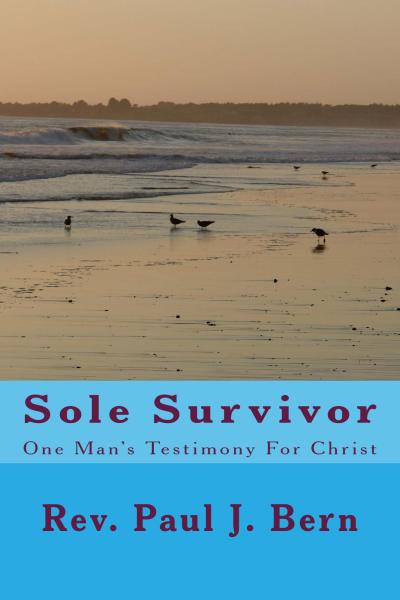
Sole_Survivor 

“Sole Survivor: One Man's Testimony for Christ”, by Rev. Paul J. Bern, rated 4.5 out of 5 stars on Goodreads.com!

Watch the video at http://youtu.be/5Bxi7x0nUc0


The next time I had an encounter with God – which interestingly enough never occurred when I was in church – was about a year later. By this time the abuse that had been going on had gradually gotten worse. The animosity between my parents and myself had grown a lot right along with it, and the beatings had become more frequent. I remember hating not just my parents, but my entire family situation as well as detesting school. Quite frankly, I was bored nearly to the point of insanity with school. Second grade was a rehashing of first grade, third grade a rehashing of the second, and so on, as if we needed to learn everything twice in order to grasp its meaning. I have heard some talk and read on the Internet about the “dumbing down” of America primary and secondary schools. Well, this has been going on ever since the 1960's at least, and probably even before that. It's just that no one noticed it at first because it began so gradually. To this day, education reform has been one of the causes I have undertaken in my adult life.


By the time I was age nine I had decided to take matters into my own hands. So I prayed to God and I told him, “Lord, I can't stand my home life any more. But I can't leave because I have no where to go (at this time it was during the winter, and Ohio winters can get very cold). If you won't do something to make my dad go away or to get him off my back, then I will be forced to defend myself when the time comes”. At the time I got no reply at all, and I remember being concerned that God hadn't heard my prayer. I had been saving the small weekly allowances my parents would give me, 25 cents here and 50 cents there, that sort of thing. And so I resolved in my mind that I was going to settle things between my parents and myself once and for all by spending what I had saved on a cheap handgun and shooting my parents. Fortunately, at the time I prayed this misguided prayer I barely had a third of the money I would have needed to buy a cheap 22 caliber handgun, and I had also forgotten to include the cost of ammunition, not to mention the fact that I was only nine years old. But I will tell you without a doubt that I was serious about wanting to kill my adoptive/foster father because I was very afraid of him. I couldn't even stand to be in the same room with him. I recall that the consequences didn't matter much to me at that time. As before, fortunately, I never got to carry out my dad's assassination. But it is what occurred a couple of years later that made me understand why such a heinous act would be unnecessary. It was not just because it would have been a grievous sin and a capital crime. It was because God wanted to show me that I wasn't alone, and that He was standing beside me.


After this prayer with no response, about two and a half years went by. Things were continuing to get gradually worse, and I continued to hate school all the more. I kept waiting for God to do something about my parents, especially my dad, but I saw no sign of change. So I would do things that would get me away from home more often so that my parents and I couldn't argue about anything. I played in the band at school and took music lessons, and I discovered that I was good at music. I joined the Boy Scouts so I could finally have a chance at having a few friends, and because it was one of the few things my 'adoptive' parents would let me do. The rest of the time I was kept cooped up in that little house, and the tension at times was unbearable. One Saturday morning a year or so later some of the boys from the scout troop and a number of their dads went on a 10 mile hike in the Kentucky countryside. My foster/adoptive dad went along too, much to my surprise, since he only occasionally took me anywhere. So we left Cincinnati in a small caravan of cars and drove south down I-75 into Kentucky to our starting point, with our destination being a monastery near the central Kentucky town of Bardstown. I recall that there were about 20 or maybe 25 people altogether. So we started out on our hike together on a mild November day, and we'd been hiking about 3 hours or so when my dad suddenly stopped walking and crouched down on one knee. When one of the men asked him if he was OK, I remember him saying, “I've got this pain in my chest”. So we stopped for five or ten minutes and rested before starting out again after my dad said he felt well enough to finish the hike (at this point the monastery was in sight in the distance). 


Unfortunately for him, we had only walked a few more steps when my dad abruptly collapsed to the pavement. I remember turning around in complete surprise, only to hear that little soft voice within me that I had heard three years before saying to me, “Now watch what I do for those who wait on me.” It was the same low, soft voice that had told me how I couldn't possibly imagine what God has in store for me. It was only then that I made the connection to my misguided prayer nearly three years earlier about shooting my parents, a prayer that by this time I had almost given up on. Even though God saw fit to wait until just after my 12th birthday, I saw my dad collapse into a heap on the ground and I stood there and watched him die. God took my dad's life to prevent me from attempting to do any such thing myself. He knew I would have been making a horrific mistake in my young life long before I ever could have. What I still failed to understand at the time was that God was interceding in my life on a regular basis, and that this happens with all people whether they realize or believe in it or not. God had something really good in store for me. I didn't realize it at the time because I was still too young to comprehend the insurmountable power of God.


I was in the sixth grade when my dad died, and I remember feeling an enormous sense of relief at his passing. As I began to get older I gradually started doing better from a mental health standpoint, but I still hated school and I stayed bored most of the time. This was also a period in my life where I began drifting away from God. I had never cared for all the ritual, pomp and circumstance of the Catholic masses I was required to attend as a child (in Catholic schools the kids go to mass every day). So I was never really drawn toward the God of the church. It was not until much later that I learned that the true God does not live in buildings, he lives inside human hearts. But long before this occurred, my disconnecting from God as I understood him at the time had already begun to take me down the wrong road. This is usually what happens to people who turn from God like I did. 

Get yours on-line directly from the author at www.pcmatl.org/books-and-donations (tax deductible) for $9.95. 


For I-books and other Apple users, as well as Kobo, Nook, Fire and more, get yours from https://www.smashwords.com/books/view/587492

See the video at http://youtu.be/5Bxi7x0nUc0 Thanks so much! Shalom....

Friday, October 13, 2017

Free book excerpt #13 from Progressive Christian author and blogger Rev Paul J Bern

"Sole Survivor" by Rev. Paul J. Bern

Now available in print, digital and audio formats. Offered on Amazon or from our website

Watch the video at http://youtu.be/5Bxi7x0nUc0


  Chapter 5

Restoration by God, Driven Away by Man

I finally got out of jail on the night of December 17th, 1999 after an agonizing 4 month wait to get my court case done and over with. The main thing I remember about that night was how incredibly cold it was. I had been arrested in early fall near the end of September, and all I had on were casual slacks and a polo shirt. After treating myself to a full sit-down dinner at an all-night restaurant across the street from the jail, I was forced to make my way on foot to the nearest place that I was sure would be open all night, which was the community hospital on the suburban east side of Atlanta about 2 or 3 miles away. So off into the freezing cold I went as I hiked over to the hospital. The two main things that motivated me to get there were the lack of outer clothing and the fact that I was already a nervous wreck from having spent those 4 months in jail without the benefit of my bipolar medication. The clinic there – and it barely qualified as such – were giving me 2 different medications that I had never heard of. They did just barely work, but they were a poor substitute for my regularly prescribed 'meds'. I recall getting to the ER about 3:30 AM that morning. To make a long story short, I spent the next 13 days at an inpatient clinic right down the street from the hospital. While I was there I got stabilized on my regular medications, and I managed to get back in touch with the district manager where I had been working when all this mess first started. I had contacted him when I was first brought to jail, trying to raise some bail money. They could not help me with that, I was told, but my job would be kept open for me until I was released. They stayed true to their word and rehired me upon my release. That Wang Global district manager's name was James Dean. God bless you, James, wherever you are.

I checked out of the hospital on a blustery Friday afternoon, and I started back to work the following Monday morning. This gives me pause with regards to God's eternal mercy, the loving way He chastises us but then restores us – but not always immediately, because His timing is always perfect. Did you ever notice that about God? His timing is always letter-perfect and never too late. Had that gone any other way, when I got out of jail I could have immediately become homeless, wandering the streets without a coat when the outside temperature was around 35 degrees, and having lost the new job I had just acquired 5 months before. Instead, and by the grace of God alone, I had landed on my feet and I was able to miraculously pick up where I had left off before all the trouble started. I give Jesus all the credit for my success, and I give him all my praise, thankfulness, and honor!

I worked that entire year, right up until Christmas time. That's when they laid us off. But it was the way it was done that bothered me the most. One day a month or two beforehand, a 15-passenger van pulled up and parked in front of the office, and these 15 technicians from the Philippines get out and enter the office conference room. The door gets shut behind them, and it isn't until the next day that the rest of us found out they were there as our replacements. The senior techs, and by this point I was one of them, were instructed to train one of them apiece. One of them said it was unfair, and he refused to train any of them, saying he could make his job last at least a week longer by not having a replacement trained and ready to go. To no one's surprise, he was fired on the spot, right where he stood, and it didn't seem to matter to him. To this day I regard this as a good example of what can and should happen to racists in the workplace.

I spent the next six months searching like crazy for a replacement job. Unfortunately, the dot-com financial crash was happening right around this time, and the computer/IT industry had pretty much came to a standstill. So I did what lots of other technical professionals like myself were doing at the time: I went back to school to get my Microsoft certification. I already had my degree, plus an A+ certification and two Dell certifications, so for me the Microsoft certification made sense (remember, this was back in 2001). But instead of making me more marketable like I thought, what few job offers I did have seemed to evaporate. All together I went for over 14 months without drawing a paycheck. My saving grace during this time was that I had substantial savings, otherwise I would surely have been homeless by that time. But homelessness escaped me when I used the small pickup truck that I owned at the time to go to work as a private contractor for a courier company. I had to take a substantial pay cut from the $35.00 per hour I had been making as a Dell service contractor, but by now my savings balance was nearly depleted. By dodging homelessness the way I had, I thought I had dodged a bullet, but I had only delayed the inevitable for a few more years. I will have more to say on that in the next chapter.

This book is available on-line from the author at www.pcmatl.org/books-and-donations (free shipping, tax deductible) for $12.95. 


Watch the video at http://youtu.be/5Bxi7x0nUc0 Thanks so much!

Wednesday, September 13, 2017

This week's Bible study will be part 3 of Luke chapter 19

Jesus Gets Treated Like a Rock Star
[Luke chapter 19, verses 28-48]
To view this in any browser, click here! :-)


Last week when we left off at verse 27 of Luke's gospel chapter 19, Jesus had just finished telling the parable of the ten 'minas' as he spoke about using that which God has instilled within us since before we were born. We as followers of Christ are charged with the responsibility of being diligent stewards and serving Christ with as much distinction as we can as we journey through life with our Savior towards our ultimate goal, which is to spend eternity with him. This week as we move on to part 3 of Luke 19, Jesus was traveling to Jerusalem with the Twelve as they were on their way to celebrate Passover at the main Temple there. As we will see, Jesus' arrival on the outskirts of Jerusalem as he made his way into town was met with a tumultuous welcome. So let's go there with Jesus and his apostles as they make their way through two small villages just north of Jerusalem, starting at verse 28.


“After Jesus said this, he went on ahead, going up to Jerusalem. As he approached Bethphage and Bethany at the hill called the Mount of Olives, he sent two of his disciples, saying to them, 'Go to the village ahead of you, and as you enter it, you will find a colt tied there, which no one has ever ridden. Untie it and bring it here. If anyone asks you, 'Why are you untying it?', tell him, 'The Lord needs it.' Those who were sent ahead went and found it just as he had told them. As they were untying the colt, its owners asked, 'Why are you untying the colt?' They replied, 'The Lord needs it.' They brought it to Jesus, threw their cloaks on the colt, and put Jesus on it. As he went along, people spread their cloaks on the road. When he came near the place where the road goes down the Mount of Olives, the whole crowd of disciples began joyfully to praise God in loud voices for all the miracles they had seen: 'Blessed is the King who comes in the name of the Lord!' 'Peace in heaven and glory to the highest!'” (Luke 19, verses 28-38)


Jesus was coming south from Jericho towards Jerusalem. The straight-line distance from Jericho to Jerusalem is 15 miles; however, the precipitous mountain road between the two cities takes the traveler much further. Embedded within this text, specifically verses 30-35, we find additional proof that Jesus was the Son of God. He sent at least two or three of his followers ahead to a village, presumably either Bethphage or Bethany, to fetch the colt mentioned in Luke's gospel. Only a man with supernatural powers could have known in advance that the colt was tied up where it was, there is simply no other way this could have occurred. Nor do I think Jesus had ESP, or was clairvoyant in any way. Neither of those even scratches the surface as far as the infinite powers possessed by the Son of God. After all, he is the only Son of an omniscient God. Moreover, the unidentified owner of the colt clearly knew who Jesus was, most likely by his impeccable reputation.


So, let's take in the full scope of what was occurring in real time back then. Jesus and the Twelve, together with an entourage that must have been in the hundreds at least, and could have been as high as several thousand, are journeying en masse to Jerusalem. At this point Jesus' ministry has been active for the last three and a half years, and his following has grown immeasurably during all that time. All the miracles, the healing and the eviction of evil or unclean spirits – which today we would likely call mental illness – for all that time had made Jesus a celebrity, something our Lord and Savior would never have called himself.


“As he went along, people spread their cloaks on the road. When he came near the place where the road goes down the Mount of Olives, the whole crowd of disciples began joyfully to praise God in loud voices for all the miracles they had seen: 'Blessed is the King who comes in the name of the Lord!'” Keep in mind that for the entire duration of Jesus' ministry, a few of the Pharisees and experts in the Law of Moses – which was the entire Bible at that time – had been shadowing him and the Twelve, looking for a way to catch Jesus in a contradiction or some kind of mental lapse with regard to what our Lord and Savior had been teaching. They were looking for anything they could find because Jesus had really gotten into their business for their hypocrisy, and they hated that! But all the people were sure of exactly who Jesus was, or so they thought. The Old Testament they were using at the time spoke reverently of a messiah that would save the Jewish people from their Roman captors, and those in the crowd were sure that Jesus was that man. Instead, his fate was far worse, as everyone would soon find out. But for now, let's go to the second half of our study, beginning at verse 39.


“Some of the Pharisees in the crowd said to Jesus, 'Teacher, rebuke your disciples!'. 'I tell you', he replied, 'if they keep quiet, the stones will cry out.' As he approached Jerusalem and saw the city, he wept over it and said, 'If you, even you, had known on this day what would bring you peace – but now it is hidden from your eyes. The days will come upon you when your enemies will build an embankment against you and encircle you and hem you in on every side. They will dash you to the ground, you and the children within your walls. They will not leave one stone on another, because you did not recognize the time of God's coming to you.' Then he entered the temple area and began driving out those who were selling. 'It is written', he said to them, 'My house will be a house of prayer', but you have made it, 'a den of robbers'. Every day he was teaching at the temple. But the chief priests, the teachers of the law and the leaders among the people were trying to kill him. Yet they could not find any way to do it, because all the people hung on his words.” (Luke 19, verses 39-48)


Here in verse 39 we have yet another example of the Pharisees trying to rebuke Jesus and the Twelve for their manner of teaching, only to be rebuked themselves by the Savior of the world! I find Jesus' range of emotions interesting right here, with him showing anger mixed with a little sarcasm in one sentence, and being reduced to tears in the next one. Jesus also prophesied against Jerusalem and its inhabitants when he said, “The days will come upon you when your enemies will build an embankment against you and encircle you and hem you in on every side. They will dash you to the ground, you and the children within your walls. They will not leave one stone on another, because you did not recognize the time of God's coming to you.” Jesus was referring to a time nearly 40 years into the future, when the Roman Empire overran Jerusalem and destroyed the temple in 70 A.D. Thousands of people perished in this attack, and the Jewish people were scattered from their homeland across the entire known world at that time, and very likely beyond that. So great was their sin against God Almighty – handing his Son over to be crucified – that the Jewish people stayed scattered abroad until Israel was made a sovereign nation by the United Nations on May 14, 1948. And that, good people, is what happens to those who make Jesus cry!


“Then he entered the temple area and began driving out those who were selling. 'It is written', he said to them, 'My house will be a house of prayer', but you have made it, 'a den of robbers'. Every day he was teaching at the temple.” I want you all to picture this in your mind. In Matthew's gospel, Jesus made a whip and physically drove the money changers out of the temple courts, but Luke doesn't mention that, I'm not sure why to be perfectly honest with you. Still, Jesus is overturning the tables as he physically forced these 'Shylocks' out of what was supposed to be a sacred area, throwing some of the chairs in the process! These tables and chairs didn't come from a store because there were no furniture stores back then. Everything was made by hand. Since these tables and chairs were made of solid wood, they were likely fairly heavy, with each table topping 100 pounds or more, maybe much more if they were of solid hardwood construction. These were not card tables and folding chairs, you can be sure of that! And Jesus' rage and indignation at his Father's house being turned into a virtual flea market was equally solid, you can be sure of that as well!


“But the chief priests, the teachers of the law and the leaders among the people were trying to kill him. Yet they could not find any way to do it, because all the people hung on his words.” Right here is where the rubber meets the road when it comes to our Lord and Savior! Even though Jesus came into the Temple area and began driving out the Shylock money changers, physically assaulting all of them who were unable to get out of his way – although the religious establishment wanted to kill Jesus, the overwhelming power of the people dissuaded them. We could and should take a lesson from just that, for in today's crazy times where so many are unhappy with the status quo it would be in the best interests of the American people to rise up against this monstrosity known as the Federal Government before we all find ourselves being liquidated and slaughtered by it (think nuclear war, climate change, FEMA camps, etc.). There is an additional lesson that we can all take from the last of Luke 19, which is that “all the people hung on his words”. How about you, is that what you've been doing? Are we all 'hanging on his words' as we learn from Christ? Not on my words, I'm just the teacher, so let's put me aside for the moment even though I personally write all these Progressive Christian Bible studies and my weekly commentaries. I'm just the messenger, but Jesus is the message. The only effective way we can “hang on his words” is by reading our Bibles daily. If you don't have a print edition, consider one of the many Bible apps there are out there and just pick one. You don't get the message of Jesus just by reading this blog, although I take heart in the fact that I perform this ministry for my Lord and Savior. You get it by reading his Word, and “hanging onto every word”. He's the Author and the architect of our minds, hearts, and faiths! Cling to Jesus and you can't go wrong! And next week we'll start on Luke chapter 20.

Sunday, August 20, 2017

There will be a guest blogger this week

While I'm away at the Piedmont Park Summer Arts Festival, I'll be trying something new by having a guest blogger submit a post for just this weekend. So sit back and enjoy this 2014 article from Flickr contributor Ashley Campbell (cross-posted by Rob Winters) on the nature of prophetic ministry and its notable importance. The first thing I need to do here is to define the word 'prophetic' in terms that are appropriate for Christianity. It does not mean, 'to tell the future'. That is how the Occult defines that word, and you can be sure the Occult and Christianity have nothing at all in common! 'Prophetic' in Christian terms simply means to declare the Word of God in such a way that applies to the here and now. We carry out this task by relying on the Bible as our main reference from which to derive that prophetic Word. The guest posting below explains how we all can do this for our mutual benefit, as well as the benefits thereof.


7 Characteristics of Authentic Prophetic Ministry
11/19/2014 by Rob Winters, Power of God Ministries
cross posted from (Flickr/Ashley Campbell)


Nothing less than a Third Great Awakening will rescue the Bride from the quagmire of apostasy in which we have found ourselves sinking. It is therefore imperative that authentic church leaders emerge to awaken the body and spearhead rescue efforts. Much has been written regarding the restoration of modern day prophets and apostles and their leadership role in the church, yet some crucial responsibilities of these offices have either been overlooked or ignored.


For example, many prophets have succumbed to the body's insatiable lust for personal prophecy and prosperity—speaking only what our itching ears long to hear instead of what our depraved hearts need to hear. Consequently, the household of God at large is on shaky ground, having huge cracks and cavities in its foundation. Devoid of righteousness and justice, many have been bewitched into adopting a gospel of boundless grace and have unwittingly plunged into the depths of hedonism and narcissism—all in the name of a loving and merciful God (Psalms 11:3; 89:14).


It is therefore crucial in this hour that the church embrace authentic prophetic and apostolic ministers whose respective roles encompass restoring righteousness and justice to our foundation. While many today are focusing on the restoration of apostles, it is important that we take a step back and reexamine the comprehensive role of the prophet. Although there are differences regarding some aspects of Old and New Testament prophetic ministry, there are elemental truths that can be resurrected from the Biblical account of the rebuilding of Jerusalem's temple under Zerubbabel (Eph. 2:19-22).


During Israel's captivity, Zerubbabel and a remnant of Israelites were commissioned by Persian King Cyrus to rebuild the temple in Jerusalem. After two years of rebuilding efforts, the Israelites ceased working on the temple for a period of 14 years due to Samaritan opposition. At this juncture the Lord sent two prophets, Haggai and Zechariah, to confront the Israelites. The result was their wholehearted re-engagement in rebuilding the temple, which they completed in only four years. What did these two prophets say or do to turn about this complacent remnant? Will the Lord commission His prophets today to awaken a sleeping church, and catalyze the body to rebuild our crumbling foundations? Let's pray so (Ezra 5:1-2).


The following seven characteristics of authentic prophetic ministry can be gleaned from this account.


  • A Call to Repentance – In his address to the Israelite remnant, Haggai challenged them to consider their ways, specifically their complacency regarding the Lord's house and their zeal regarding their own houses and possessions. Sound familiar? Similarly, Zechariah confronted their apostasy, encouraging them to repent and return to the Lord. Without a doubt, this type of bold confrontation of sin must first be heralded from our pulpits before we will ever witness the depth of profound repentance necessary to turn the church around and the world upside down (Hag. 1:2-9, Zech. 1:3-4).
  • The Voice of the Lord - Haggai's account indicates that the entire remnant of the people obeyed the voice of the Lord their God, and the words of Haggai the prophet. In an age when so many claimed to speak in behalf of God, Haggai made a distinction between the Lord's words and his own words. Today, the church is facing the same dilemma. Not all who say, "Thus saith the Lord," speak for the Master. Some prophesy as a means to gain popularity and prosperity or to promote their pet doctrine. Therefore, it is crucial that the eyes, ears and heart of the body are conditioned to distinguish between the voice of the Master and that of a charlatan (Hag. 1:12).
  • The Fear of the Lord – Authentic prophetic ministry is also accompanied by the spirit of the fear of the Lord, producing genuine repentance and radical obedience. Haggai's and Zechariah's ministries yielded this kind of fruit, and so must prophetic ministries today. Like Jesus, prophets who delight themselves in the fear of the Lord partake of that same spirit by dwelling in the secret place of the Most High. Without the spirit of the fear of the Lord, preaching repentance has about the same effect as brow beating.
  • Stirs Up the Remnant – Haggai's preaching "stirred up the spirit" of the entire remnant, inspiring them to resume rebuilding the house of the Lord. Authentic prophetic ministry should "cut to the heart," provoking a passionate response to the Word of the Lord. Unfortunately, over the past 40 years the majority of American Christians have turned a deaf ear to the Lord's command to humble ourselves, pray, seek His face and turn from our wicked ways. Consequently, we have found ourselves in a spiritual wilderness and our land is in need of much healing (Hag. 1:14; 2 Chron. 7:14).
  • Prospers the Remnant – The book of Ezra records, "the elders of the Jews built, and they prospered through the prophesying of Haggai the prophet and Zechariah, the son of Iddo. And they built and finished it, according to the commandment of the God of Israel." Although much of modern Christendom associates prosperity with wealth, the Old Testament word for prosperity means "to break out mightily" or "push forward." Authentic prophetic ministry enables us to boldly break out of the bondages and eliminate the excuses that keep us from pushing forward toward the mark for the prize of the high calling of God in Christ Jesus (Ezra 6:14; 2 Chron. 20:20).
  • Ever-Increasing Glory – Those among the remnant who were old enough to remember Jerusalem's former temple wept over the new temple because it was most inferior. Nevertheless, Haggai prophesied that the glory of the latter temple would be greater than the former. Similarly, in these last days, while cathedrals remain dormant, our chapels and tents will be filled with hungry people seeking and finding the glory of God (Hag. 2:6-9).
  • The Burden of the Lord – Two of the three biblical references of the phrase "the burden of the Word of the Lord" are found in Zechariah. Much of prophetic ministry today is associated with man's private agenda instead of God's purposes—a product of what is on men's hearts instead of what is on God's heart. Conversely, authentic prophetic ministry begins with a burden from the Lord that finds expression through soul travail and a burning word from heaven that cannot be contained. That burden only comes by dwelling in the secret place with the Most High (Zech. 9:1, 12:1; Jer. 20:9).


Father, restore authentic prophetic ministry to Your church, that we might be awakened from our slumber, shaken out of our complacency and inspired to radically carry out Your purposes in the earth. Commission Your prophets, that they might carry Your burden, preach repentance and restore righteousness to Your church's foundation, in Jesus' name, amen.


Rob Winters is president of Prepare the Way International, an itinerant prophetic ministry based in Glendale, Arizona. He is author of numerous books, including Turning America Back to God and Prophets and Prophetic Ministry. For more information, visit his website at preparethewayint.com.

Friday, July 21, 2017

Another free book excerpt from Author Rev. Paul J. Bern

"Sole Survivor" by Rev. Paul J. Bern

A free sample from the book's author!

Watch the video at http://youtu.be/5Bxi7x0nUc0

Available in print, digital or audio formats on Amazon, Kindle, Nook, Apple and Goodreads. To learn more, go to www.pcmatl.org/books-and-donations 


From that day forward, the relationship between my adoptive father and myself was continually adversarial.

My parents both became nearly impossible to please, and I absolutely hated school anyway, so there we were at an impasse. They were always insisting that I get better grades, and I would respond by doing just enough work to get a passing grade. So every so often I would get another whipping with a belt, particularly around report card time. Sometimes it was because I had a lot of behavioral problems at school, other times it was for an unsatisfactory report card, and once for going over to the house of someone I knew from church to listen to their Beatles records (the Beatles were a very big deal during this time). I remember one day I just sat in my room after enduring yet another beating – I don't remember what it was for but that no longer matters – and cried to the point of sobbing uncontrollably about my whole situation. I was saying, “Why me, Lord? Why does it always have to be me that gets beat with a belt? Is my whole life going to be like this? Is there no way it can get any better?” It was at just that point that I heard what seemed like a soft, low voice. Although not audible in the human sense, it was just barely audible deep down from within me, and it said, “You can't possibly imagine the things I have in store for you”. I did not realize it at the time, but I had just had my first encounter with the true God. Although I understood the words well enough, I failed to grasp their meaning because I was only about eight years old. But I have always remembered what happened when I was alone in my room that day.

The next time I had an encounter with God – which interestingly enough never occurred when I was in church – was about a year later. By this time the abuse that had been going on had gradually gotten worse. The animosity between my parents and myself had grown a lot right along with it, and the beatings had become more frequent. I remember hating not just my parents, but my entire family situation as well as detesting school. Quite frankly, I was bored nearly to the point of insanity with school. Second grade was a rehashing of first grade, third grade a rehashing of the second, and so on, as if we needed to learn everything twice in order to grasp its meaning. I have heard some talk and read on the Internet about the “dumbing down” of America primary and secondary schools. Well, this has been going on ever since the 1960's at least, and probably even before that. It's just that no one noticed it at first because it began so gradually. To this day, education reform has been one of the causes I have undertaken in my adult life.

Sunday, May 21, 2017

Renewing America Like Progressive Christians Should

The USA Is Becoming A Failed State:
Seven Simple Steps to Turn It Around
by Pastor Paul J. Bern
To view this in your browser, click here! :-)


As I look around me today, I see the United States of America as a failing country. There are just too many things going wrong with America today all at once! Failing to adequately tackle the inherent problems in our economic system: Failing to reflect on the deep flaws in our system of government: Failing to repair our image abroad: Failing in education, in health care, in human rights, and in religious tolerance. In fact, we look a lot like the USSR in 1990 – except with a lot more big-screen TV’s. And so I have composed this week's commentary listing what I view as our worst problems, followed by some helpful suggestions for solutions to the mess that we Americans find ourselves in today.


First, a quick word about president Trump. I have already written at length about my feelings regarding Donald Trump's handling – or mishandling, depending on your point of view, of his still-new presidency. But there is another side to all the hub-bub about president Trump, and that is the fact that he is a Washington outsider. Trump came into Washington, DC last January to shake things up, and he has run into a mountain of resistance from the existing political establishment. Instead of “draining the swamp”, the swamp has nearly swallowed up president Trump! But at the end of the day, much of the storm of controversy about the Trump presidency has been generated by the press, and at least as much as the Democrats, if not more.


Some people may well take issue with my contention that the political and governmental systems are broken, including the courts and penal systems, or even that we have a great health care system. I respect anyone's right to those opinions – freedom of expression is one of the few things our country hasn't managed to screw up in the last couple of hundred years. But in every case, the data backs me up. Allow me to try and substantiate my claims first, before suggesting a few possible solutions. First, let's take a look at the economy: in 2009 alone, 131 banks failed. That number had dropped to 5 in 2016, and there have been 5 more so far in 2017 with more than 6 months to go. The 2008 bailout granted billions of dollars – with strings attached – to private companies who then used the money to short-sell the market, make countless billions more, hand the government back its money (removing the strings) and pay out lavish bonuses while Americans lost their jobs. Meanwhile, the median family income is less today than it was in 1970.


Our government, meanwhile, is no longer run by competing ideologies but by corporate interests (I include both parties in this category since both are moneymaking enterprises disguised as political parties). There are good Republicans who would prefer that your cancer-stricken child had health insurance. There are responsible Democrats who are horrified by our country's 'spend now and pay later' approach to finance. But since they are beholden to their version of a higher power – corporate America, Wall St. and the almighty dollar – they have convinced themselves to vote with their wallets, not with their conscience. At the Federal level, AT&T and Goldman Sachs combined have contributed over $75M over the last 20 years to both political parties, and the American Federation of State, County & Municipal Employees, plus the International Brotherhood of Electrical Workers, aren't far behind.


Across the world America's reputation is tarnished, perhaps irrevocably, and yet we find our President – in the words of former vice-president Dick Cheney – following the 'Bush Doctrine' of a surge in forces occupying a foreign country with seemingly little chance of categorical success. We are seen as an economic and religious bully, and we don't seem to care. We vilify our political enemies for their human rights records, and import cheap goods from countries we know to exploit child labor. We are, to much of the world, intolerable hypocrites. About this Jesus said, “....you experts in the law, woe to you, because you load people down with burdens they can hardly carry, and you yourselves will not lift one finger to help them.” (Luke 11: 46) Isn't this exactly where we find ourselves in 21st century America?


Apologists for the American health care system, not to mention “Obama-care” or so-called “Trump-care”, will continue to defend those systems at all costs, claiming that so-called 'socialist' states such as England, France and Sweden (which, incidentally, is actually a constitutional monarchy governed by a center-right coalition) kill their citizens at will in order to save money, or make you wait thirty years for a kidney transplant. Deflecting (especially with such utter garbage) doesn't make our system any better, and it's always bad business practice to spend too much time putting down the competition. When our own kids can't get health care because mom and dad have no money to pay, something is terribly wrong. Any anthropologist will tell you that we took better care of our young when we were Neanderthals – so what's changed? For one in six of our citizens to remain uninsured is a national disgrace. We deny basic human rights to our own people! Whom you choose to marry is not a matter for the government to decide, it is a matter for the individual (“work out your own salvation with fear and trembling before the Lord”). So it is for what religion to follow, if any (although I will continue to vigorously preach pure Christianity as the only true way to eternal salvation). Some may not like our choices, but they are inalienable rights and you should be free to exercise them as you will. Our US Constitution says you can (search: First Amendment).


As far back as 2005, statistics showed that hate crimes against Muslims were increasing 50% year-on-year. Even so, the FBI reported that in 2016 hate crimes against homosexuals had increased 10% from 2015, and those motivated by religion had risen by 12%. This is outrageous in the extreme as far as I am concerned. The track we have taken over the last fifty years has been the wrong one, and America is way past due for a serious course correction. We have let corruption, greed, fame, intolerance and a stubborn refusal to acknowledge our problems almost ruin our nation. We are failing to live the American Dream, and if we don't start now our children will never even know what it was. I have several fairly radical ideas. I'm sure you have some of your own, and I welcome them in the comments below. I have chosen not to expound on what I personally think the consequences of these actions would be, as I would be diving headlong into speculation.


1. Immediately and totally stop all corporations from giving money to political parties. Reverse Citizens United and make our elections publicly funded!


2. Make a promise to our children: you will be well-educated, and you will be treated with dignity and respect when you are sick.


3. Change the game. Capitalism is broken and must be replaced, and the smoothest transition I have found is that of a resource-based instead of a debt-based economic system. Any time you have less than 1% of America's population controlling the upper 99% of the cash flow, some legislated redistribution is clearly called for (or maybe an executive order to that effect). We can start with worker owned businesses instead of shareholder ownership. Public business ownership will still exist, but smaller – such as a cooperative – will be much better in many cases.


4. Take a page out of the Bible and just treat everyone else with some genuine respect and unconditional love. If it was good enough for Jesus, it should be good enough for you. About this the apostle John wrote, “This is love: not that we loved God, but that he loved us and sent his Son as an atoning sacrifice for our sins. Dear friends, since God loved us, so we ought to love one another” (1st John 4, verses 10-11). True love for each other means unconditional love with no strings attached! Respect others and yourself as well. Leave the gays alone. Leave the blacks alone. Leave the immigrants alone whether you think they're here legally or not. Leave the Muslims or the Christians alone, too. Even the atheists, despite the fact that they're all totally lost! Pray for them instead! When respect departs, enmity is the next train along.


5. Pay for it. Child labor is inexcusable! If it costs an extra ten bucks, or extra hundred bucks to buy something that was made by willing workers, pay for the darned thing! And the same goes for government. You want health care? Pay for it. More troops? Pay for them. Tax breaks for corporations? Not a chance, they have way too many of those already.


6. Form coalitions based on issues, not parties. Not every NRA member is anti-abortion. Not every tree-hugging hippie thinks that owning a gun is wrong. When a party tells you how you should think, and what issues should be thrown together into what bucket, you're a lot closer to communism than you think you are.


7. Buy American whenever possible. From what I can tell, the great empires of yore – from Egypt to Rome to England – were 'first-to-market' with some manufacturing innovation or other, that led to more innovations, and greater strides, that in turn led to them becoming the largest producers of goods in their region. This happened to the USA from the dawn of the twentieth century until the 'fifties. Then we began to transform into a service economy, just as those others did. Producing goods is what is making China become a world powerhouse, and if we are to compete, we must produce our own. American goods are always equal to the best even though they are almost never the cheapest, but if we are to reinstate our status as the world's greatest country, we need to start by supporting our own businesses and workers. We're in a really big mess, but if enough people commit to working together to solve our problems, we can do anything we set our minds to!