Showing posts with label human error. Show all posts

Wednesday, August 23, 2017

This week's Biblical teaching will be part 1 of Luke chapter 19

Forgiveness for Cheaters, Hustlers and Crooks
[Luke chapter 19, verses 1-10]
To view this in any browser, click here! :-)
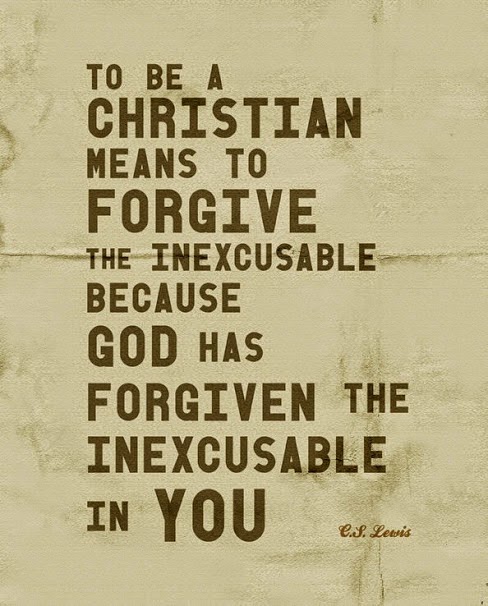


Today as we start chapter 19 of the Gospel of Luke, Jesus and the Twelve – along with an entourage consisting of many believers plus a few accusers – has left the place where Jesus had healed the blind beggar and had just arrived in Jericho. Presumably the beggar Jesus had healed was among that number, if for no other reason than he was actually able to see Jericho for the first time. But there was more to it than just that, as I pointed out last week. That formerly blind beggar was transformed in his mind, not just his eyesight. He put those newly healed eyes to good use, as the scripture says (“Immediately he received his sight and followed Jesus, praising God”). He became a follower of Jesus in Spirit and in Truth, which is exactly what should happen when we give our lives to Christ! The blind beggar who had been healed became a minister of the Good News of Jesus, and we have a responsibility as authentic believers to emulate Jesus just like that healed beggar did. One thing you can be sure of – that formerly blind ex-beggar was well taken care of for the entire remainder of his life, so long as he kept on telling everyone what Jesus had done for him. We are all charged with the task of aspiring to be the same. Bearing that in mind, let's go ahead and get started with this week's lesson right from the top of chapter 19.


“Jesus entered Jericho and was passing through. A man was there by the name of Zacchaeus; he was a chief tax collector and was wealthy. He wanted to see who Jesus was, but being a short man he could not, because of the crowd. So he ran ahead and climbed a sycamore-fig tree to see him, since Jesus was coming that way. When Jesus reached the spot, Jesus looked up and said to him, 'Zacchaeus, come down immediately. I must stay at your house today.' So he came down at once and welcomed him gladly. All the people saw this and began to mutter, 'He has gone to be the guest of a sinner.' But Zacchaeus looked up and said to the Lord, 'Look, Lord! Here and now I give half my possessions to the poor, and if I have cheated anybody out of anything, I will pay back four times the amount.' Jesus said to him, 'Today salvation has come to this house, because this man, too, is a son of Abraham. For the Son of Man came to seek and save that which was lost.'” (Luke 19, verses 1-10)


Make no mistake about this, the tax collectors worked for the Roman Empire. They were the enforcement arm of Rome's equivalent to the modern IRS here in America. As such, they routinely misused and often abused their authority to squeeze ever-increasing sums of money from their subjects, in a manner eerily similar to what the US government does today with the federal income tax. Like the IRS in modern times, the Roman tax collectors like Zacchaeus in Jesus' time were universally hated and despised, and were considered by the people to be a symbol of corruption. So now you know why everybody started muttering to each other when Jesus became “the guest of a sinner.”


So Jesus and the Twelve were passing through Jericho on their way to Jerusalem to celebrate Passover, as was their custom. When Jesus spotted Zacchaeus perched in the tree along the roadside and asked to stay at his house that day, he undoubtedly upset the Pharisees who followed along with Jesus and the Twelve. They did this mainly to gather some 'intelligence' about Jesus for the Sanhedrin, or ruling religious body at the Temple in Jerusalem, and to look for evidence to use against him. But Zacchaeus, the 'corrupt official' of no account among the people, recognized immediately who Jesus was, while the Pharisees and teachers of the Law still did not understand that he was the Messiah, or the Promised One. How ironic! The person there with the worst reputation among the people is the first to see Jesus for who he is, while those with the best reputations were 'stuck on stupid'!


“But Zacchaeus looked up and said to the Lord, 'Look, Lord! Here and now I give half my possessions to the poor, and if I have cheated anybody out of anything, I will pay back four times the amount.” Here is proof in black and white that Zacchaeus knew exactly who Jesus was. He must have reasoned to himself, “I am the most hated man in town. If I profess any belief in this man, I will have many accusers accusing me of giving false testimony about myself. So I had better seek forgiveness from this man called 'Jesus'.” We have a word for what Zacchaeus did, and that word is 'repentance'. Zacchaeus repented of his old ways and discontinued his old habits the instant he recognized Jesus as the Savior and Redeemer of all humankind. Moreover, he did it publicly in the presence of many eyewitnesses so there could be no room for doubt in the minds of Christ and the people that Zacchaeus' repentance was authentic.


Because this occurred, Jesus responded, “Today salvation has come to this house, because this man, too, is a son of Abraham. For the Son of Man came to seek and save that which was lost.” What did Jesus mean by 'son of Abraham'? He was referring to Genesis chapter 15, verses 1-6, when God made his covenant with Abram. The Lord Jesus then stated to Zacchaeus that he was one of the “sons of Abram”, the founding father of the Israeli people who God later renamed “Abraham” (see Genesis 17, verses 4-9). Then Jesus said, “....the Son of Man came to seek and save that which was lost.” Jesus doesn't care about the self-righteous. You know, like the Pharisees that had Jesus under surveillance? Or like the vendors in the Temple whose tables and chairs Jesus tossed around like match sticks? (except that didn't happen yet in the apostle Luke's narrative)


Jesus came to rescue sinners like us, people who struggle daily with their own selfish and sometimes evil natures and with all their imperfections, character flaws, inconsistencies and even occasional insanity. But these kinds of things are the very reason why Jesus went to the cross of Calvary and sacrificed himself so selflessly. The ugly truth is we're not strong or good enough to live up to the standards of our Creator. Consequently, we would be unfit to live forever in eternity with Christ, and we would be irretrievably lost. Try to see this from God's point of view. Because, in the end, His viewpoint is the only one that's going to matter.
Think all these things over very carefully this week as we close out our Biblical study. Our eternities after our physical lives are over are nothing to be playing around with! The truth of this matter is that those who live their lives only for themselves, for fame and fortune, for riches and wealth and the power that goes with them all, will have nothing when their lifetimes run out. They can't take their materialistic junk with them when they pass away, and neither can we. But, placing our complete trust in Jesus who saved us all from eternal death and shame, and being willing to hand over control of our lives to him, guarantees life for all eternity with the One who made us. As for myself, anything less than this simply won't do. I can only hope and pray that you all agree. And next week we'll move on to part 2 of Luke chapter 19.

Sunday, May 22, 2016

The Positive Side of Error

Human Error And What It Can Teach Us
by Rev. Paul J. Bern


It has been my observation that people take a great deal of pride and personal satisfaction, not to mention their professional identity, in their educations and professional training. The existence of the Internet constantly reminds us that knowledge is power, but more importantly that knowledge is instantly available. Some self-righteous – even belligerent – individuals take this fact to its outer extreme by going through life with the attitude that unlimited Web access equals unlimited personal power and knowledge. This philosophy of no limitations is the seed from which human failure sprouts, having failed to recognize that human intelligence has its limits despite a wealth of available knowledge. King Solomon wrote in the book of Proverbs in the Old Testament, “The Lord catches the wise in their craftiness”, and the prophet Isaiah wrote, “The intelligence of the intelligent I will frustrate”, and, “God had chosen the foolish things of the world, and the simple, to confound the wise”. So much for human intelligence. 


The fact of the matter is that we do not learn anywhere near as much from formal education as we do from our own mistakes. For example, I will use the household cleaner known commercially as “Formula 409”. How did the inventor come up with this name? He had to make 408 different formulas that didn't work in order to come up with one that did. That means he/she had to make 408 mistakes in order to come up with the winning formula that we know today. Life experiences work exactly the same way. We learn and adapt from our experiences as we go along in life because that is how the human brain is wired. Our brains learn from constant modification based on our surroundings, our environment and the sum of our experiences. On the other hand, being right can also have its benefits. As pleasures go, it is, after all, a second-order one at best. Unlike many of life's other delights – chocolate, the great outdoors, movies, books – it doesn't enjoy any mainline access to our biochemistry: to our appetites, our adrenal glands, our sex drive, our emotions. And yet, the thrill of being right is undeniable, universal, and (perhaps most oddly) almost entirely undiscriminating. Nor does subject matter; we can be just as pleased about correctly identifying the model year of a vintage Corvette, or correctly identifying the sexual orientation of our co-worker. Stranger still, we're perfectly capable of deriving satisfaction from being right about disagreeable things: the downturn in the stock market, say, or the demise of a friend's relationship.


Like most delectable experiences, rightness isn't ours to enjoy all the time. As the apostle John wrote, “If we claim to be without sin, we deceive ourselves and the truth is not in us. If we confess our sins He is faithful and just and will forgive us our sins and purify us from all unrighteousness. If we claim we have not sinned, we make Him out to be a liar, and his Word has no place in our lives.” (1st John chapter 1, verses 8-10, NIV) Clearly, humankind is prone to error because we're made that way. The time-worn phrase, “Nobody's perfect”, continues to be a gross understatement, and it always will. I think the biggest reason we enjoy being right is because it happens so relatively infrequently. Because when we're not, we're the one who loses the bet. And sometimes, too, we suffer grave doubts about the correct answer or course of action – an anxiety that, itself, reflects our desire to be right.


On the whole, though, and notwithstanding these lapses and qualms, our indiscriminate enjoyment of being right is matched by an almost equally indiscriminate and sometimes irrational feeling that we are right. At times, this feeling spills into the foreground, such as when we argue, evangelize, or make predictions. Often, though, it is just psychological backdrop. Most of us go through life assuming that we are basically right, basically all the time, about basically everything: about our political and intellectual convictions, our religious and moral beliefs, our assessment of other people, our memories, our grasp of facts. As absurd as it sounds when we stop to think about it, our steady state seems to be one of unconsciously assuming that we are very close to infallible. Most of us navigate day-to-day life fairly well, after all, which suggests that we are routinely right about a great many things. And sometimes we are not just routinely right but spectacularly right: right about the orbit of the planets (mathematically derived long before the technology existed to track them); right about the healing properties of aspirin (known since at least 3000 BC); right to track down that woman who smiled at you in the cafe (now your wife of 20 years). Taken together, these moments of rightness represent both the high-water marks of human endeavor and the source of countless small joys. They affirm our sense of being smart, competent, trustworthy, and in tune with our environment. More important, they keep us alive.


Individually and collectively, our very existence depends on our ability to reach accurate conclusions about the world around us. In short, the experience of being right is imperative for our survival, gratifying for our ego, and, overall, one of life's cheapest and keenest satisfactions. Yet even that can be an illusion (or a delusion, take your pick) as the apostle James, the half-brother of Jesus, wrote: “The brother in humble circumstances ought to take pride in his high position. But one who is rich should take pride in his low position, because he will pass away like a wild flower. For the sun rises with scorching heat and withers the plant; its blossom falls and its beauty is destroyed. In the same way, the rich man will fade away even while he goes about his business.” (James chapter 1, verses 9-11, NIV) But the ministry of Christ was aimed towards those who were willing to acknowledge their imperfections, just as Jesus said: “I have not called the righteous, but sinners to repentance”. As a minister myself, I am glad when I'm right, but more interested in how we as a culture think about error, what the Word of God says about it, and how we as individuals cope when our convictions collapse out from under us. If we relish being right and regard it as our natural state, then our feelings about being wrong are the exact opposite. For one thing, we tend to view it as rare and bizarre – an inexplicable aberration in the normal order of things. For another, it leaves us feeling idiotic and ashamed. Like the term paper returned to us covered in red ink, being wrong makes us cringe and slouch down in our seats; it makes our heart sink and our resentment rise. At best we regard it as a nuisance, at worst a nightmare, but in either case – and quite unlike the gleeful little rush of being right – we experience our errors as deflating and embarrassing. And it gets worse. In our collective imagination, error is associated not just with shame and stupidity but also with ignorance, lazyness, psychopathology, and moral degeneracy. It is the common view of oneself that our errors are evidence of our gravest social, intellectual, and moral failings.


Of all the things we are wrong about, this view of human error might well top the list. It is our mega-mistake: We are wrong about what it means to be wrong. Far from being a sign of intellectual inferiority, the capacity to err is crucial to human cognition. Far from being a moral flaw, it is inextricable from some of our most humane and honorable qualities: empathy, optimism, imagination, conviction and courage. And far from being a mark of indifference or intolerance, wrongness is a vital part of how we learn and change. Thanks to error, we can revise our understanding of ourselves and amend our ideas about the world. For those who refuse to acknowledge their errors, King Solomon wrote about people like them in the Book of Proverbs, “There is a way that seems right to a man, but in the end it leads to death”. (Proverbs 14: 12) People who insist on going their own way end up getting consumed by it. The lucky survivors wind up in jails, mental hospitals, rehab, or any combination thereof. Given this centrality to both our intellectual and emotional development, error shouldn't be an embarrassment, and cannot be an aberration. On the contrary, as Benjamin Franklin once observed, "the history of the errors of mankind, all things considered, is more valuable and interesting than that of their discoveries." I believe the healthiest and most productive attitude we can have about sin and error is that however disorienting, difficult or humbling our mistakes might be, it is ultimately wrongness, not rightness, that can teach us who we are. And in the end, it is that recognition of our own sinful, mistake-prone nature that ultimately leads us to the sole solution – Jesus Christ. Ask Him into your hearts today. Jesus came that we might have life, and have it to the full. Go ahead, just do it.